自在之所 A Place of Ease
-
自在之所
家的自在,不在於毫無秩序,
而是在秩序之中,
仍保有選擇的餘地。
拿掉既定的觀看方向,
也鬆開空間與功能之間的關係。
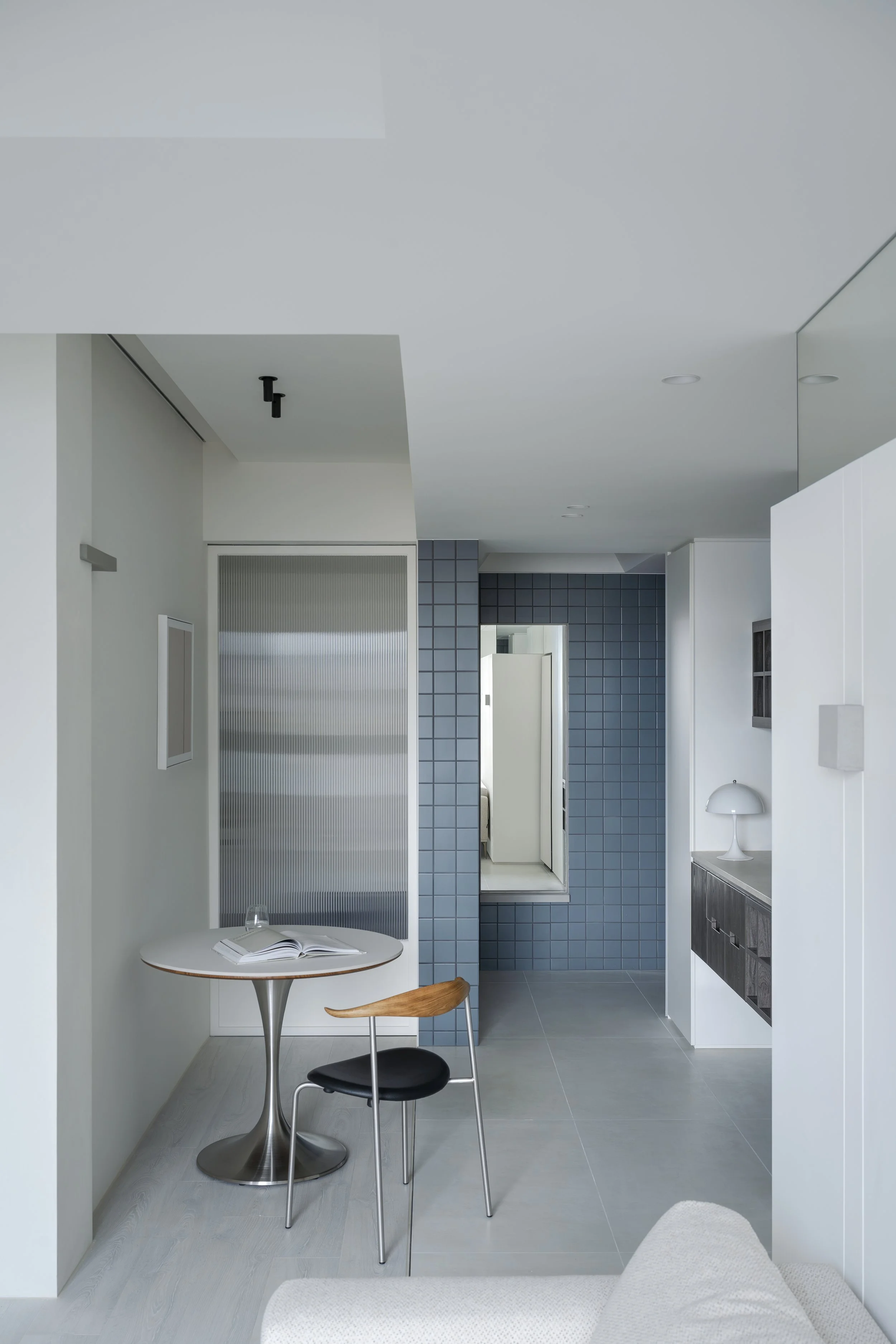
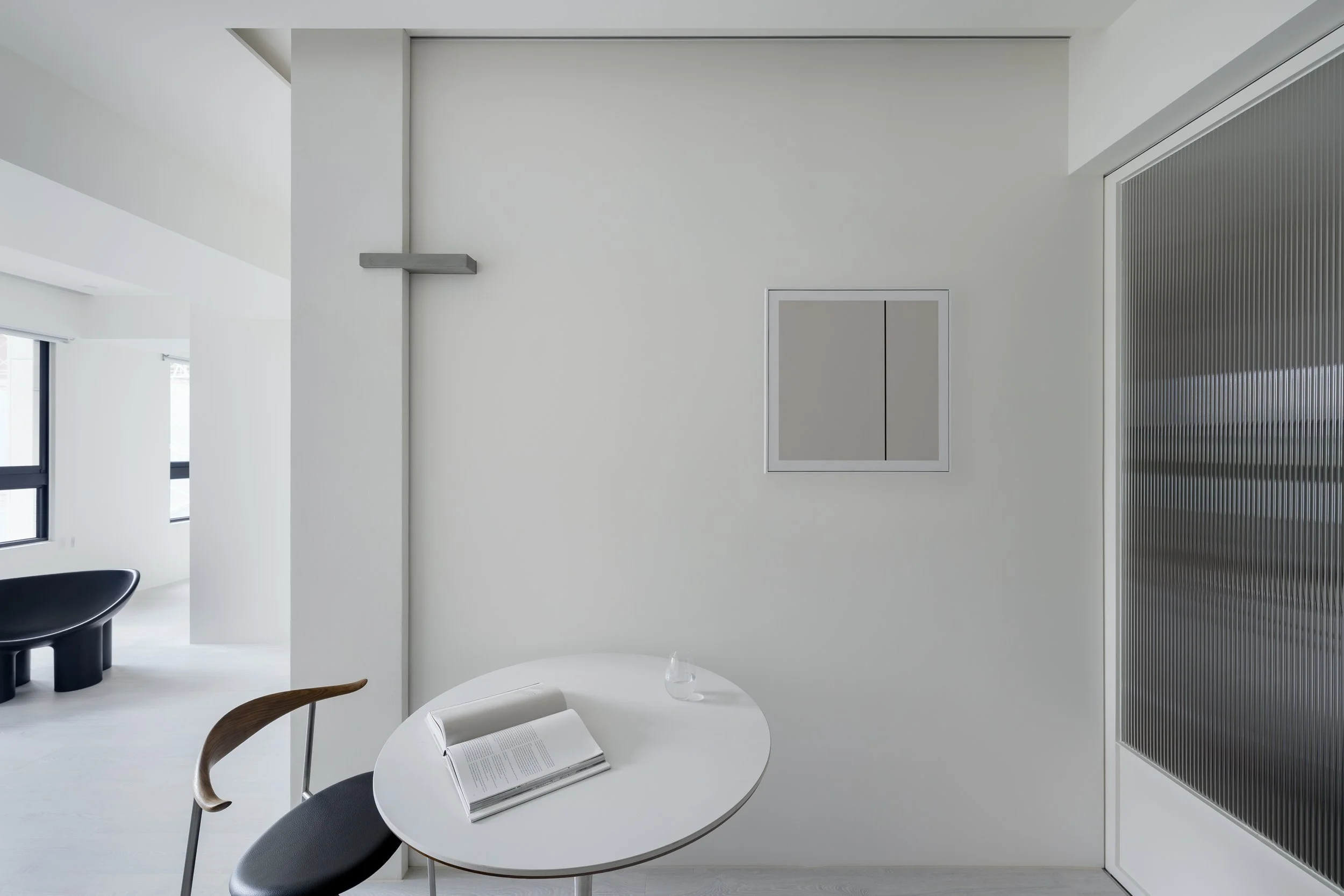
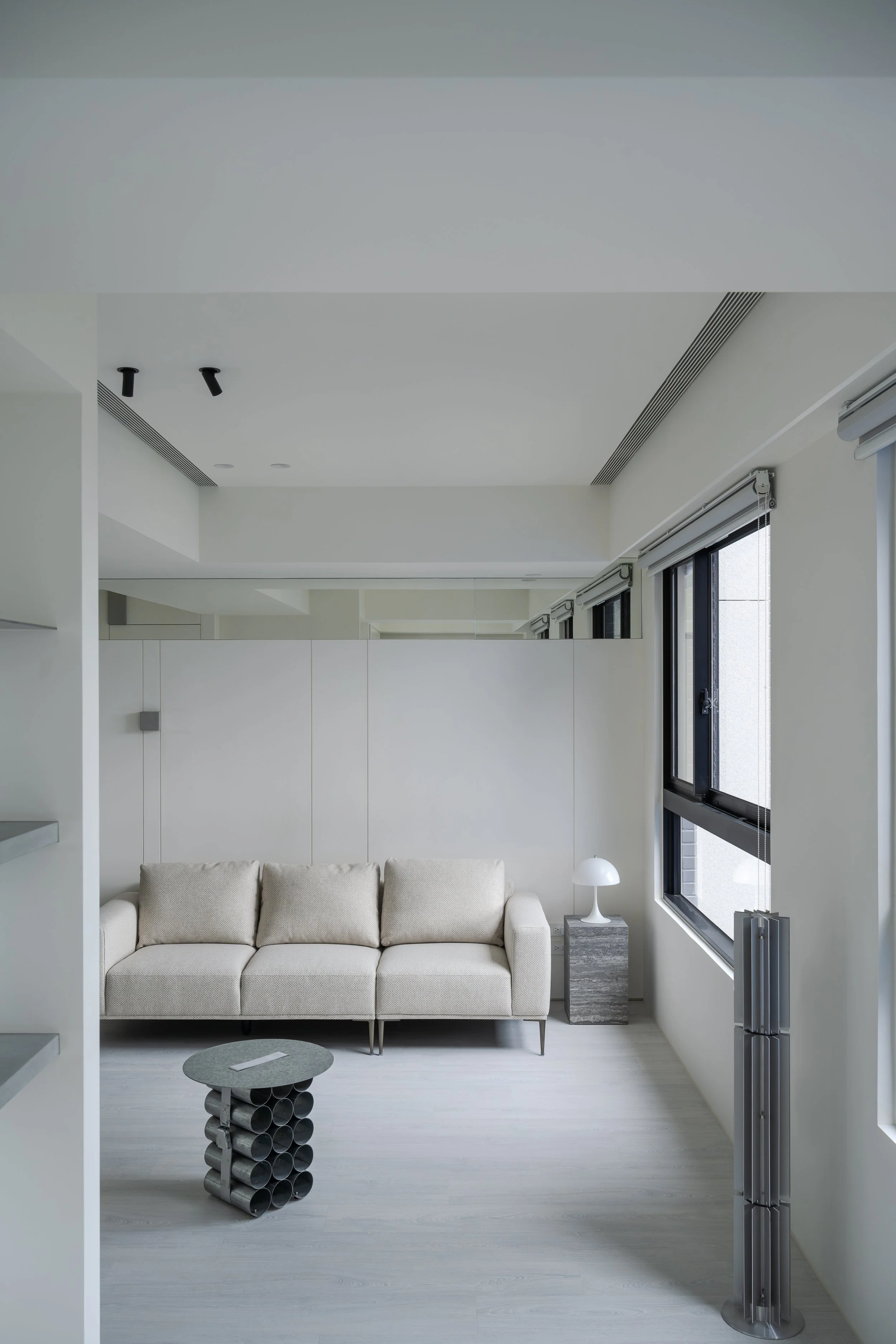
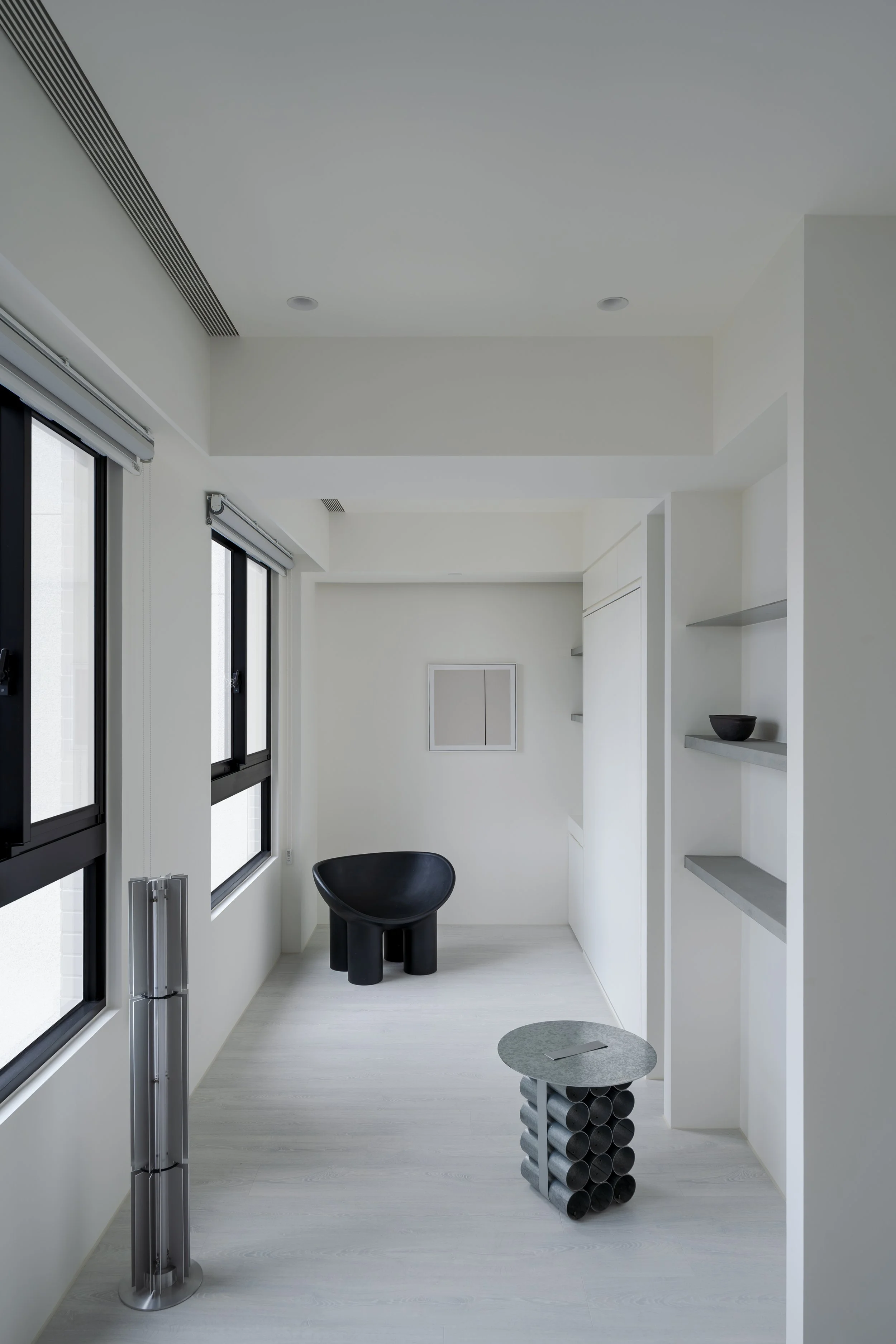
客廳不再以電視為中心,
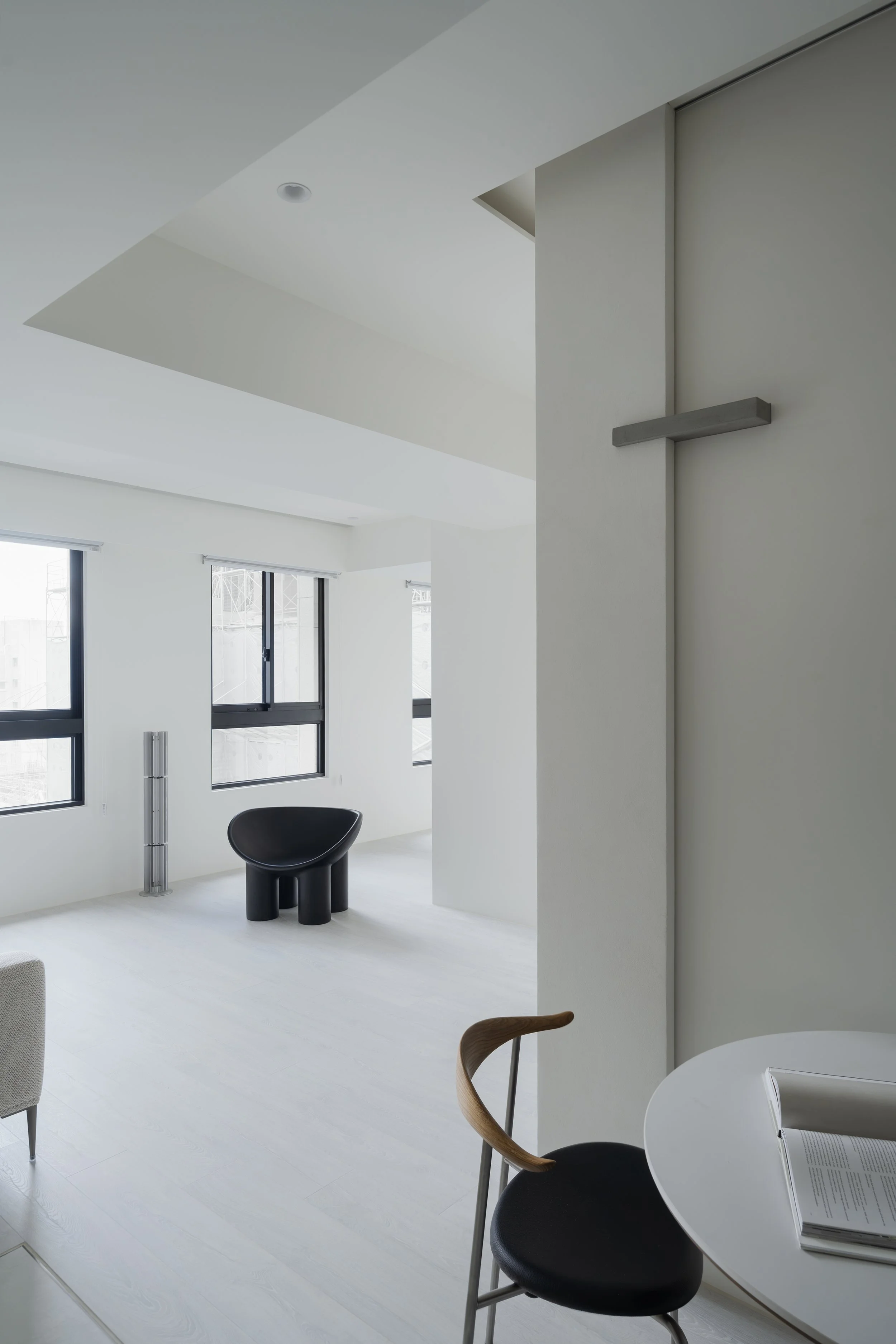
一張可以自由移動的單椅,
隨著閱讀、交談或獨處改變位置;
人的所在,重新決定了空間的方向。
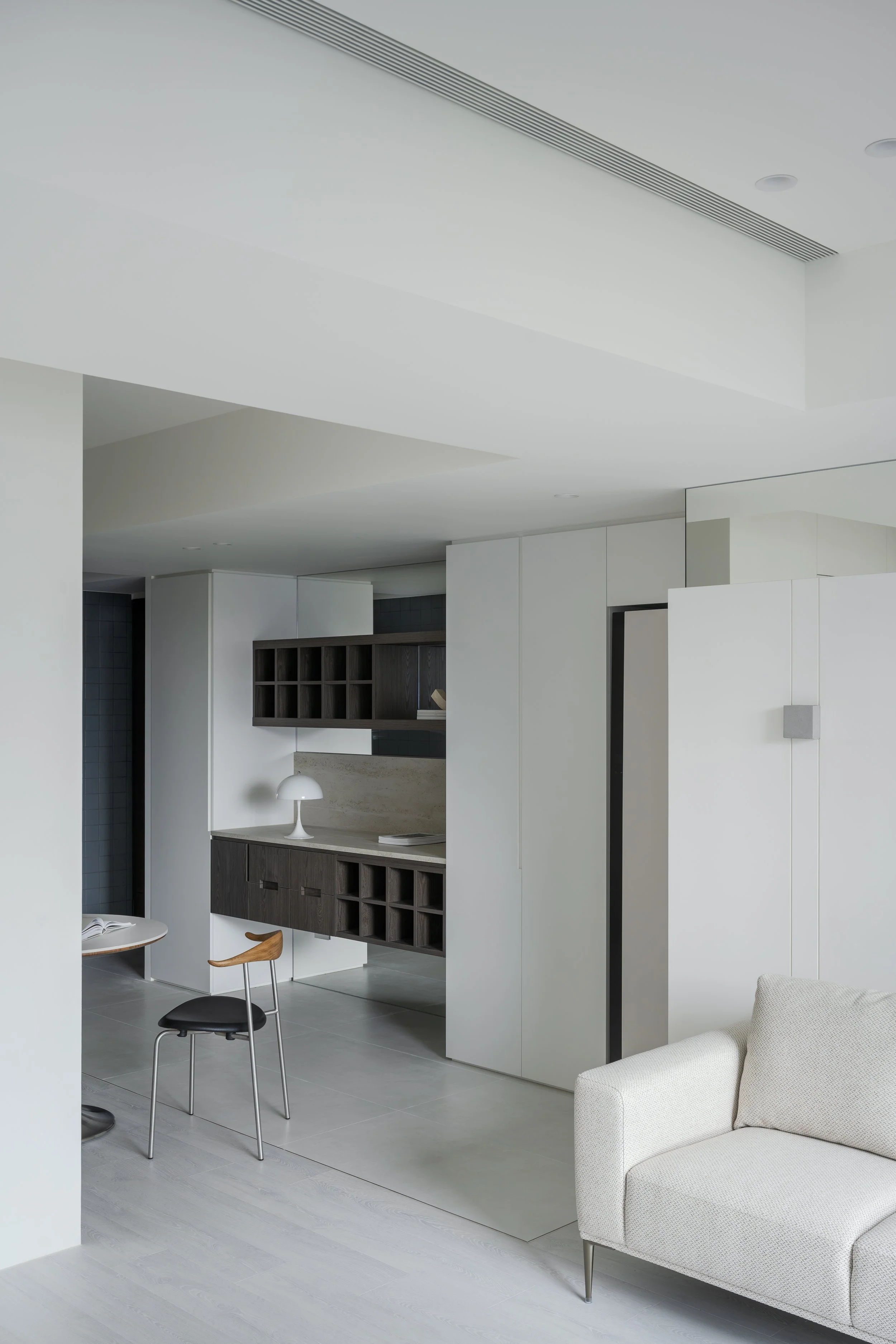
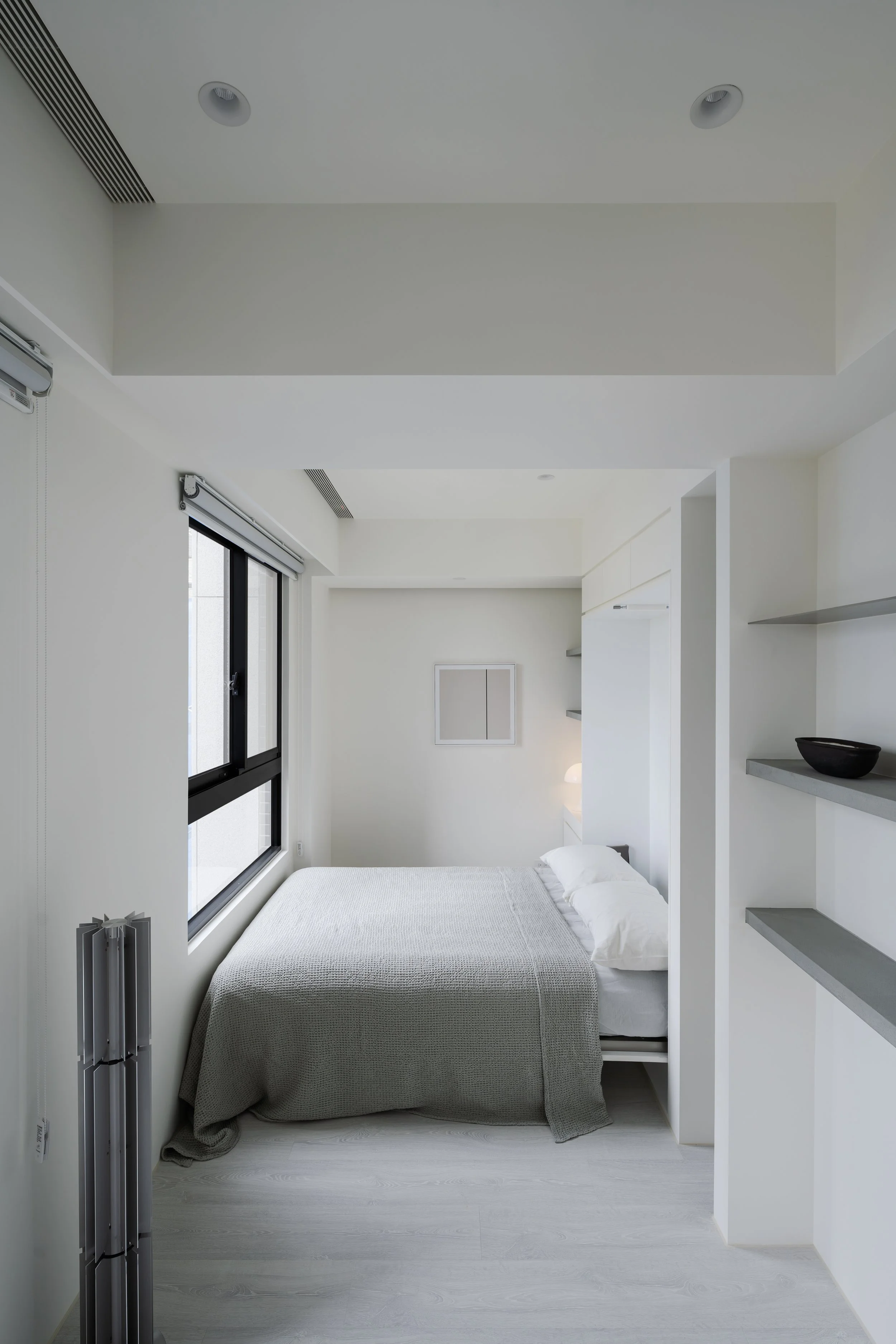
後方留下一處可轉換的起居場域,
隨著掀床收放,在日常與睡眠之間切換。
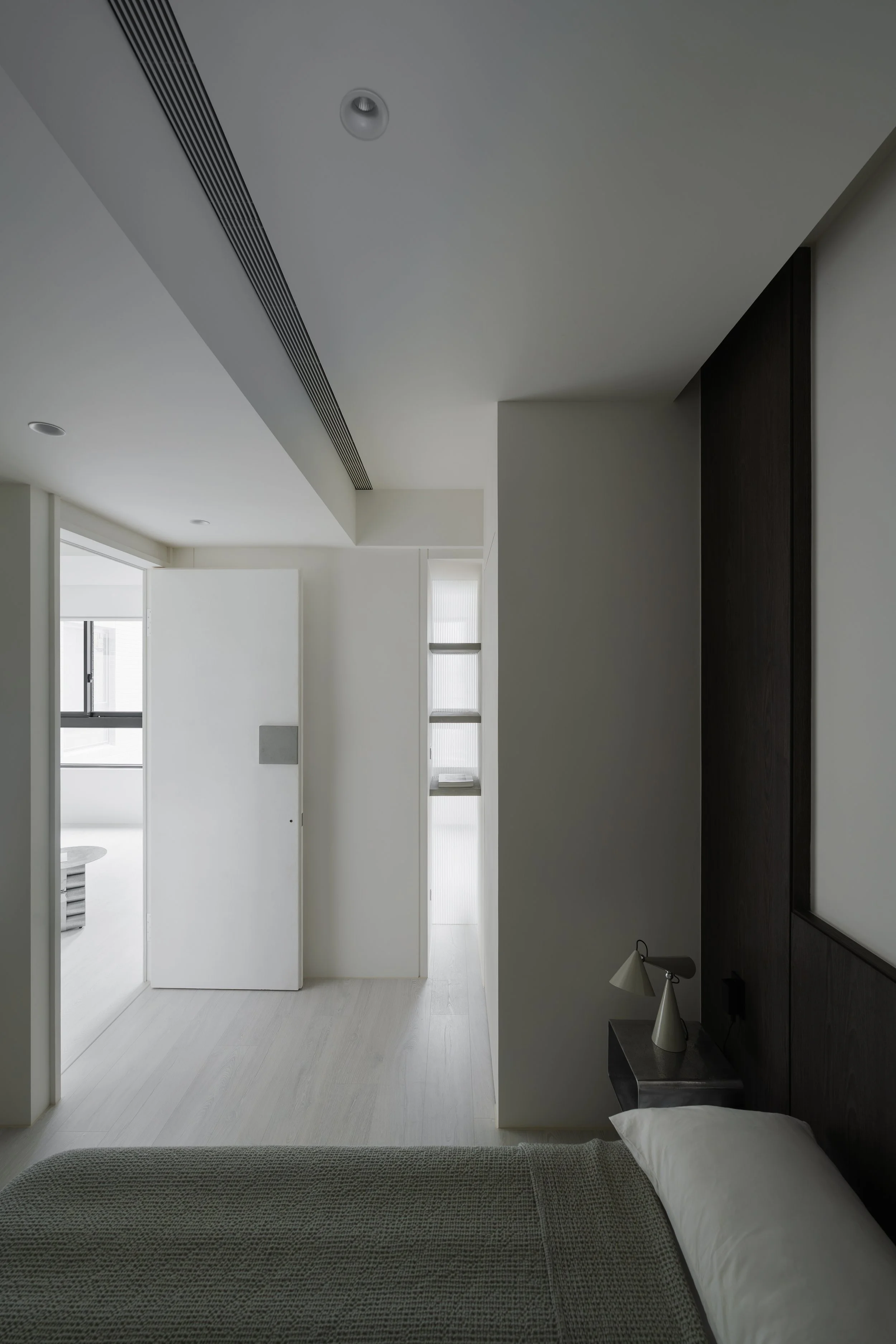
長虹玻璃輕輕界定場域,卻不阻斷光的穿行;
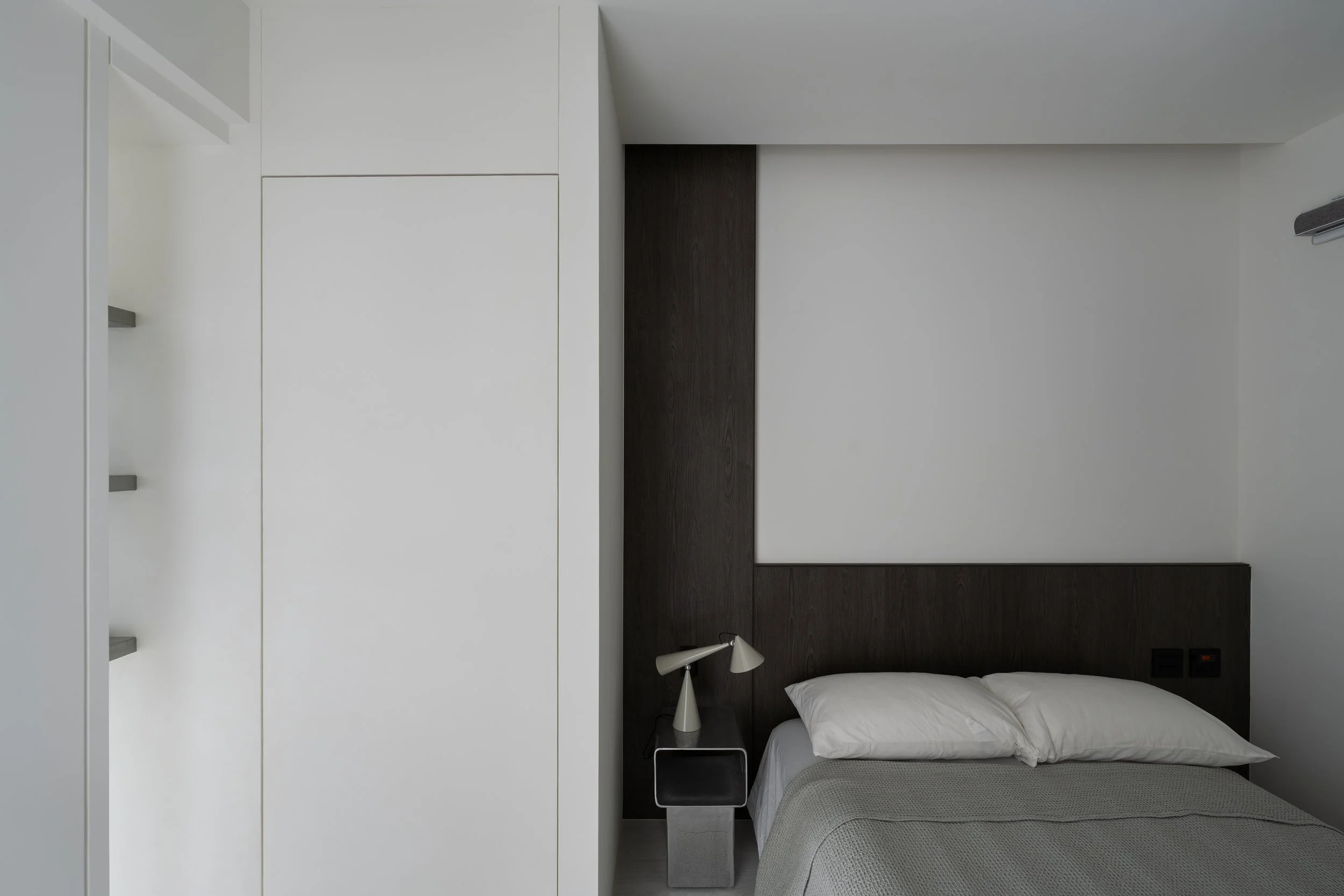
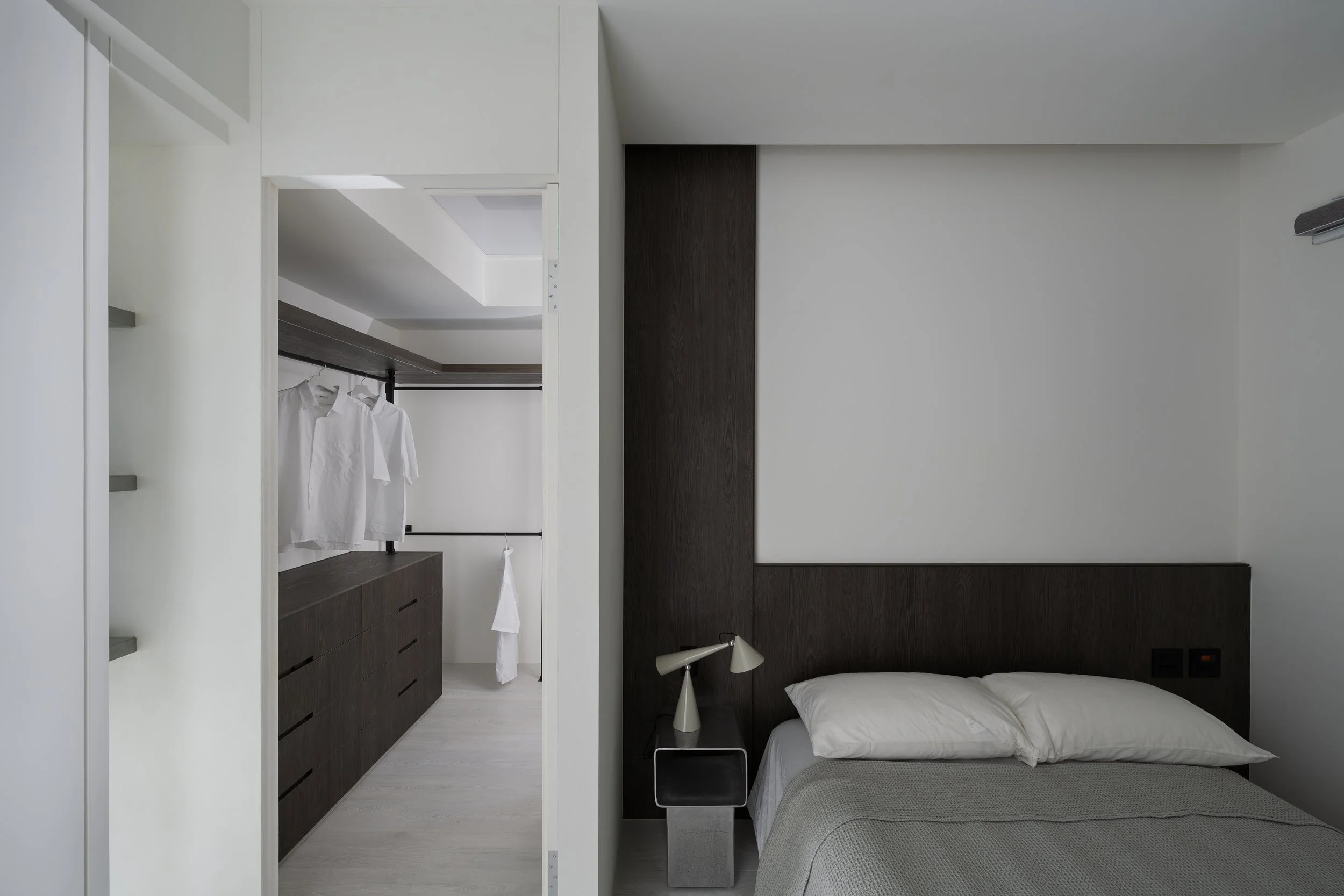
延伸至主臥與更衣空間,
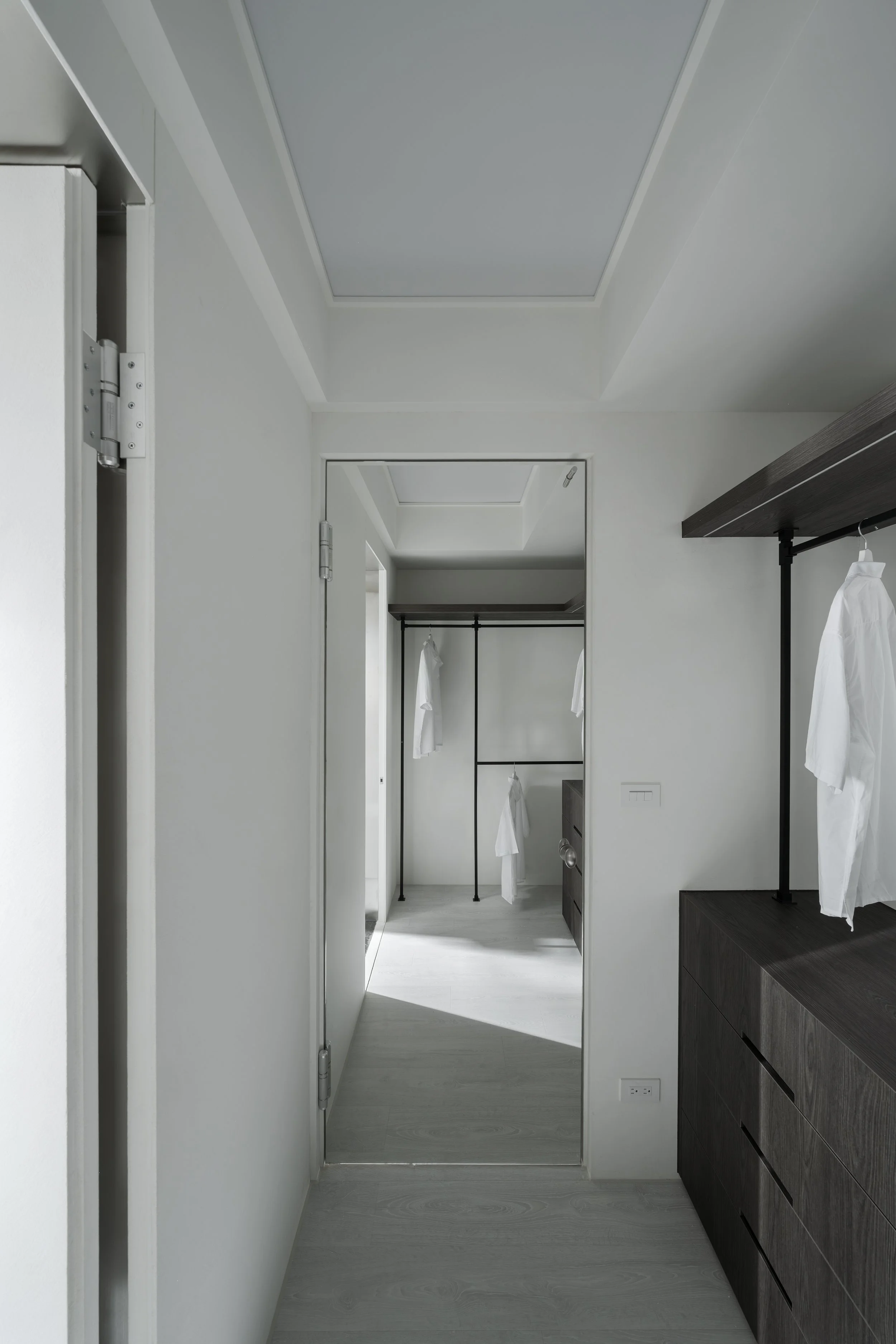
透光材質、層板與鏡面彼此交錯,
讓光越過一道道界線,串連不同的生活片段。
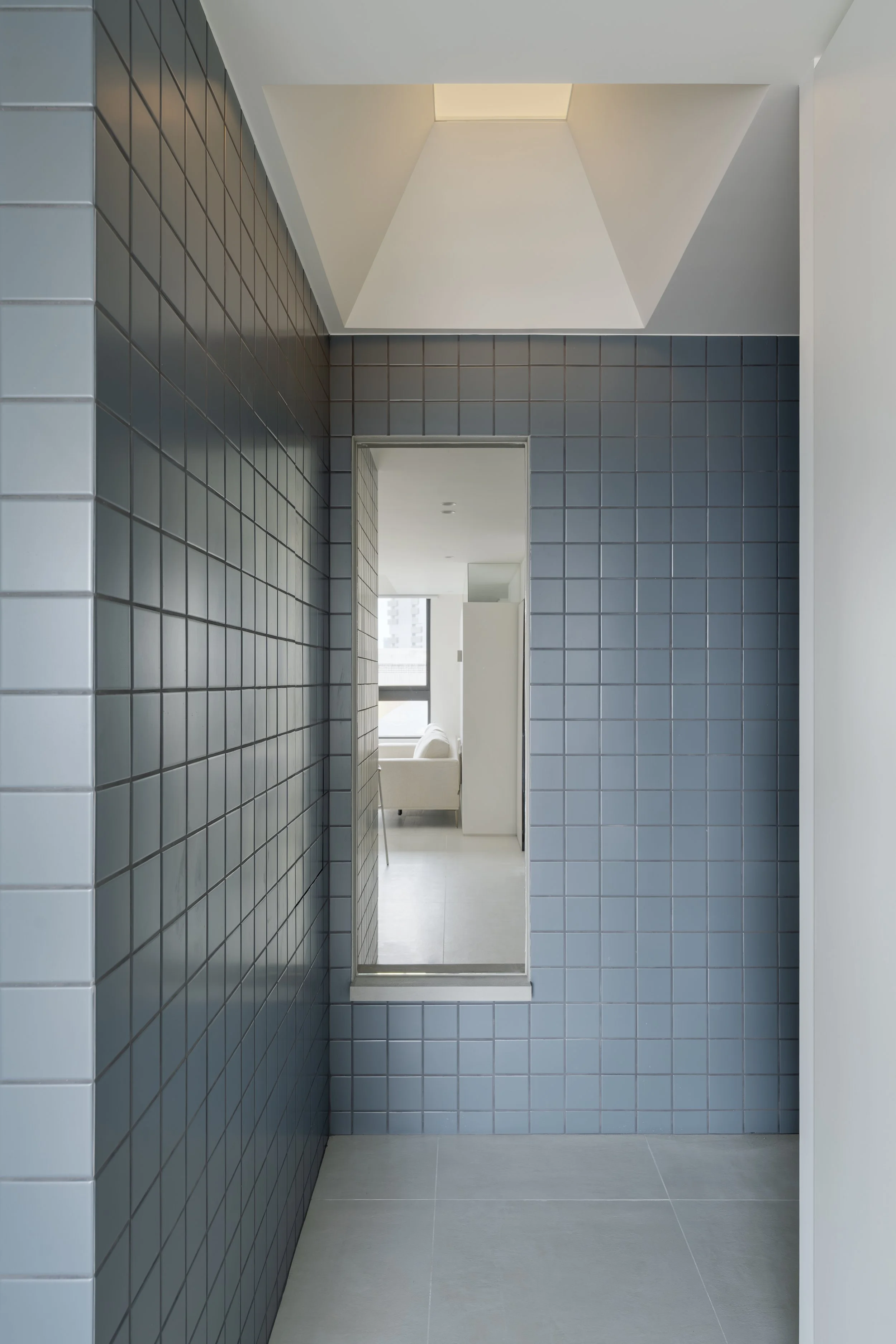
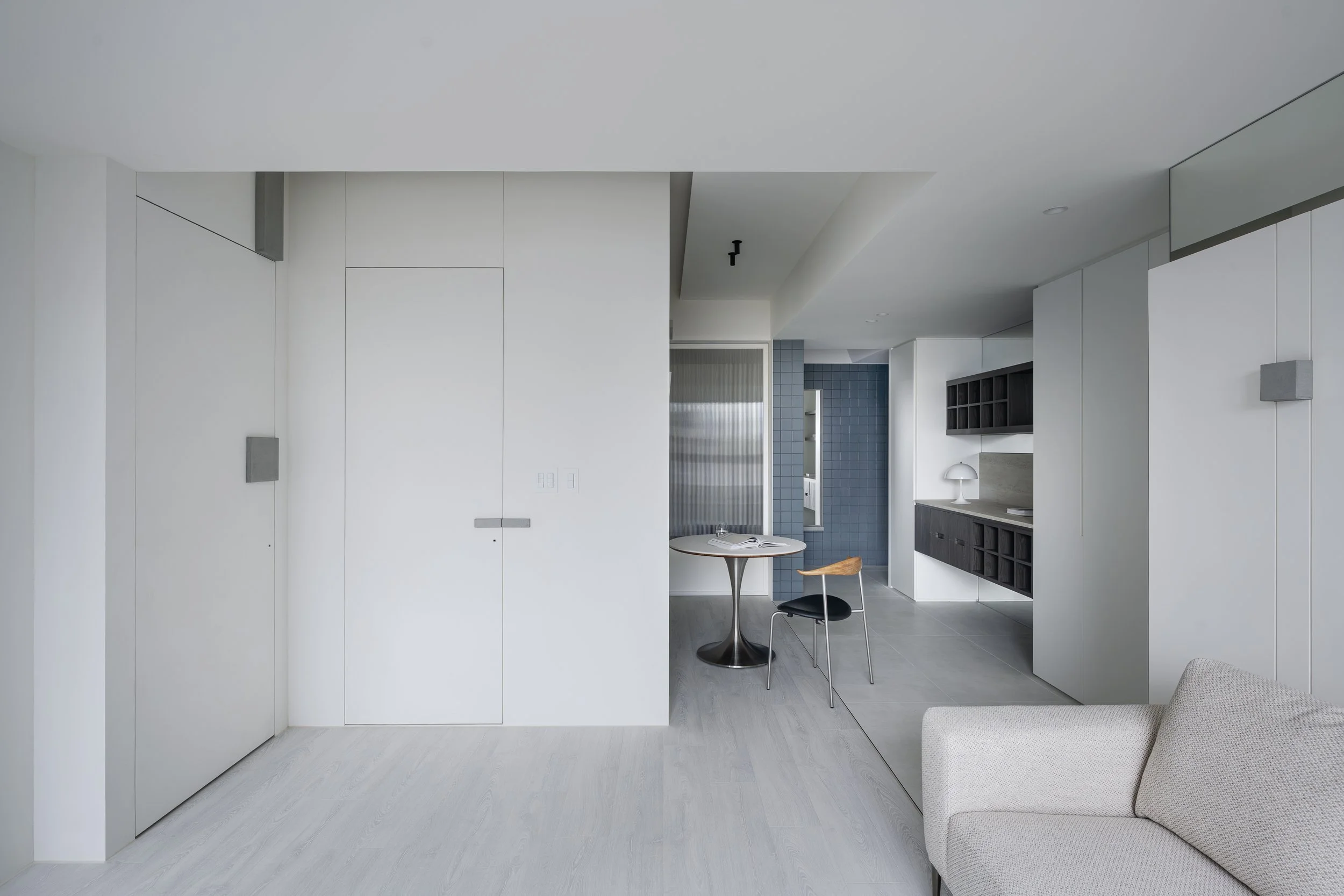
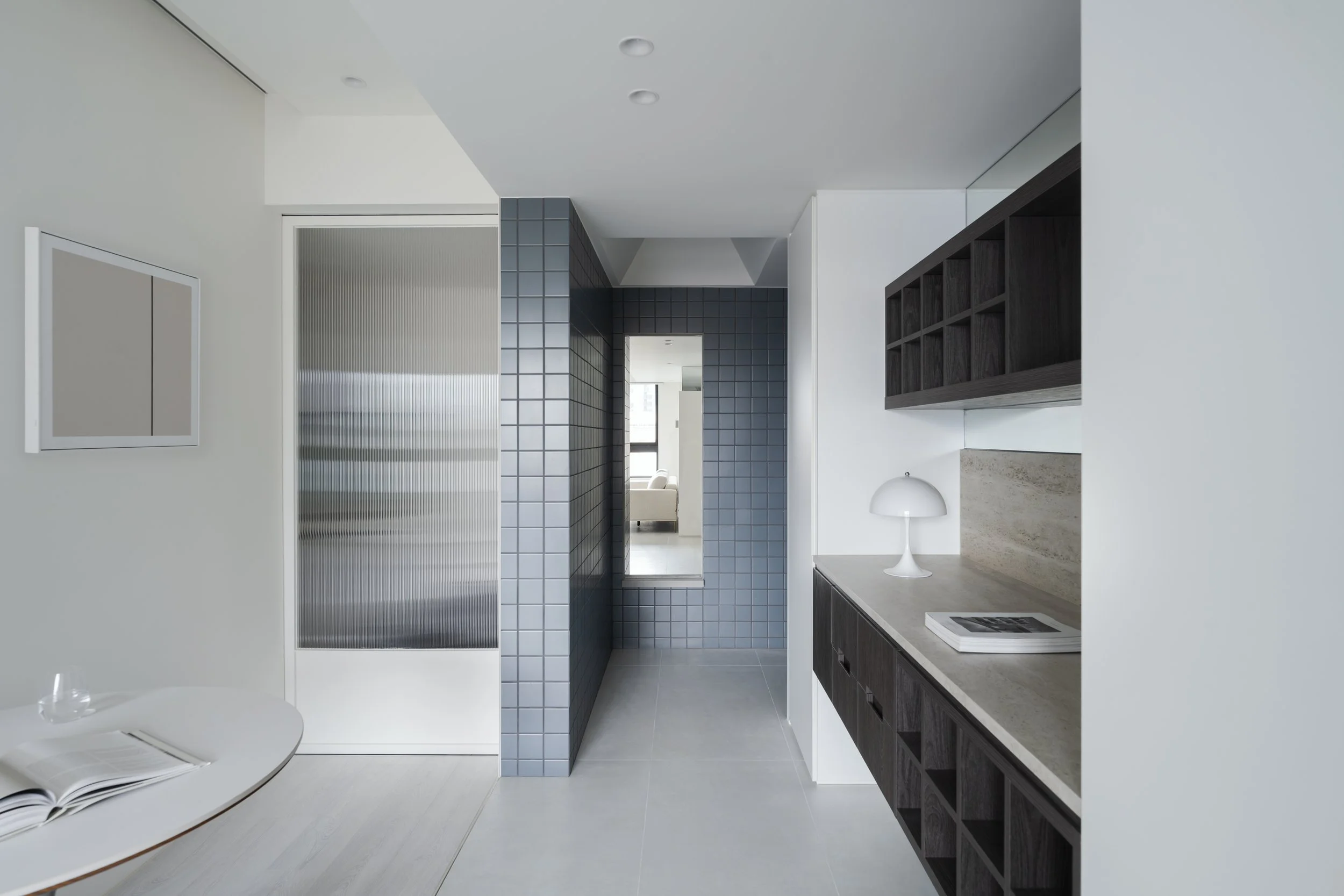
入口以一抹沉靜的藍展開,
馬賽克沿牆建立秩序,
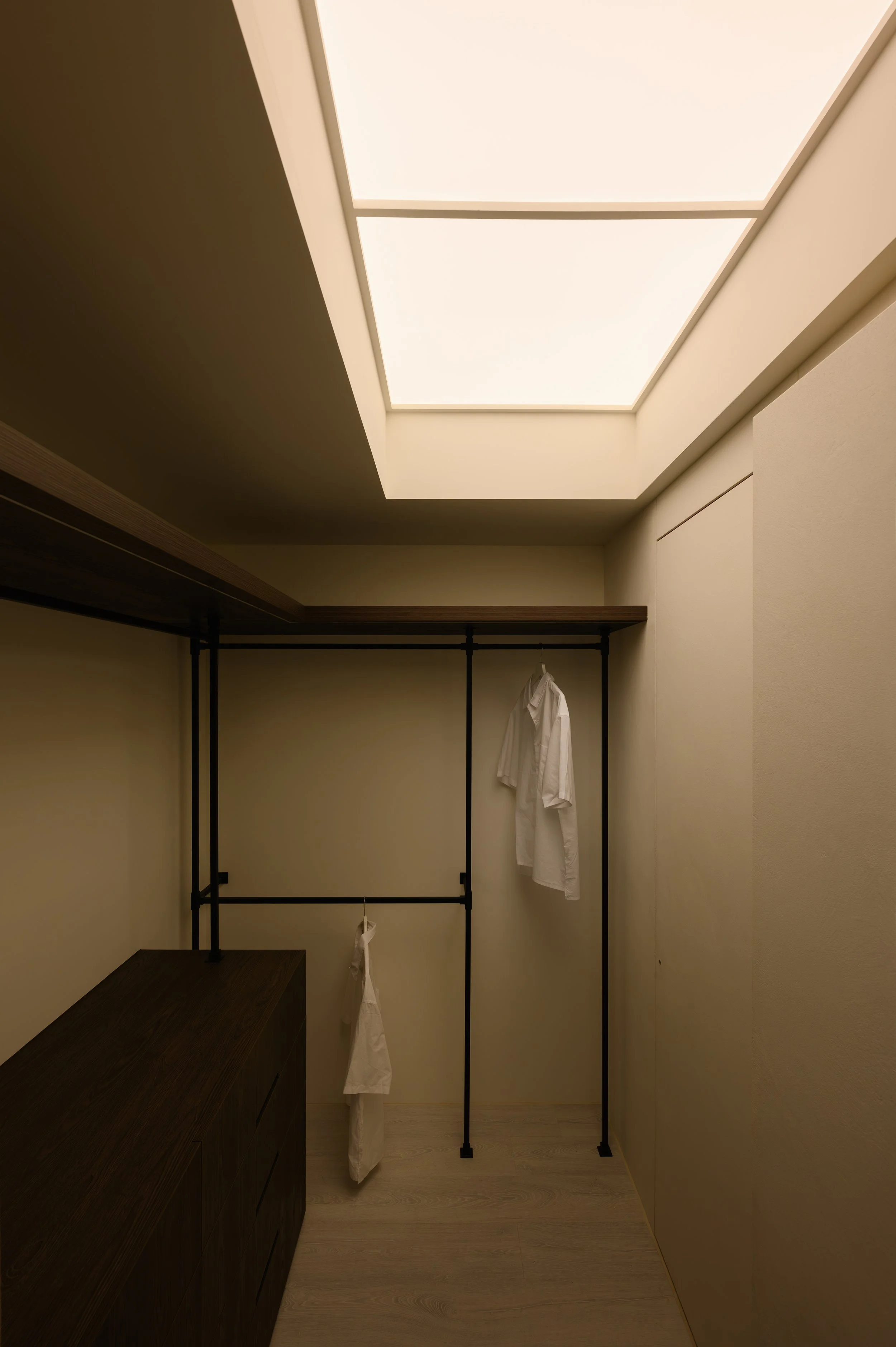
向上承接錐體狀的流明天花;
光自內凹的輪廓漫開,
造型鏡面映入另一側的景象,
在色彩、光與倒影之間,延伸空間的邊界。
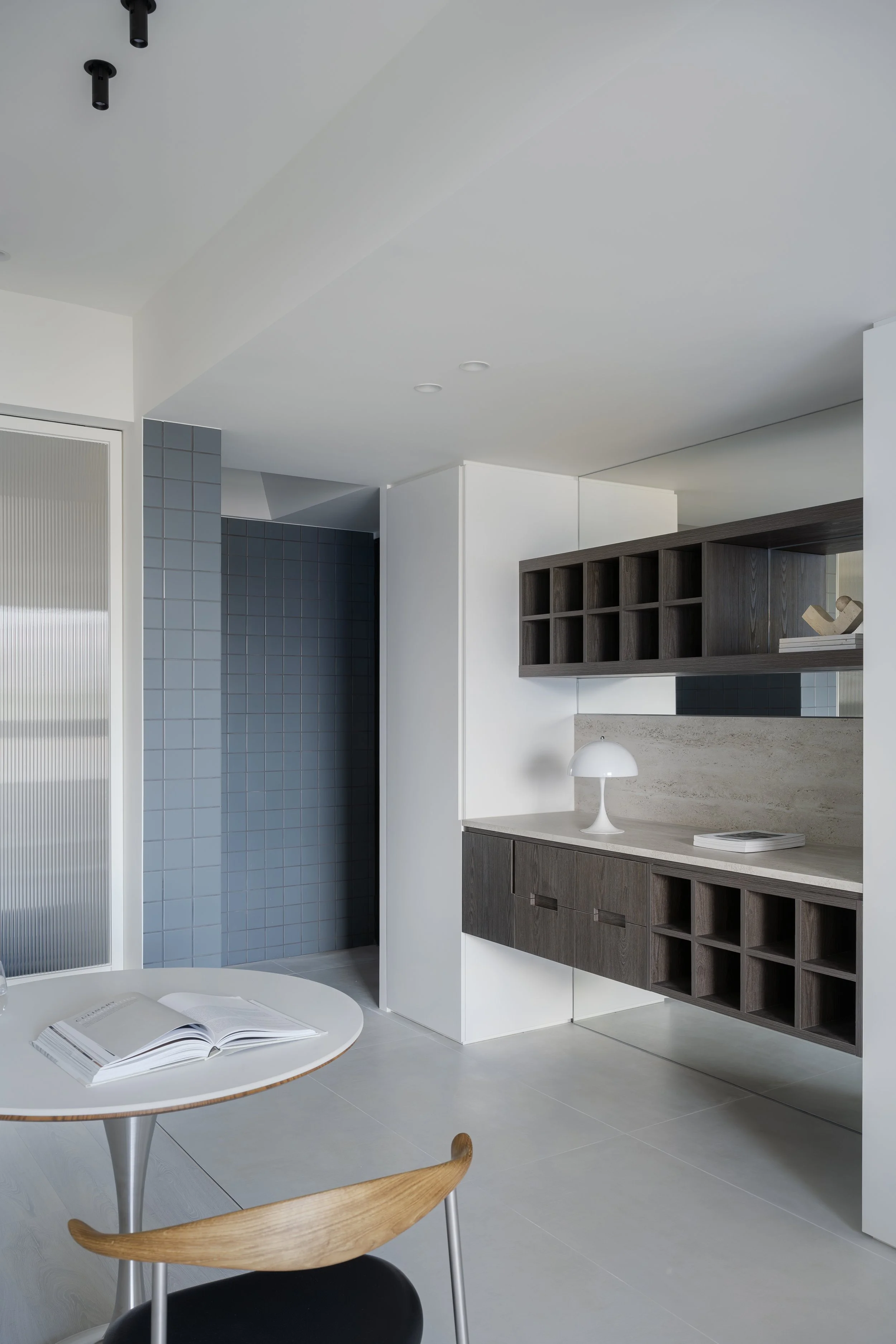
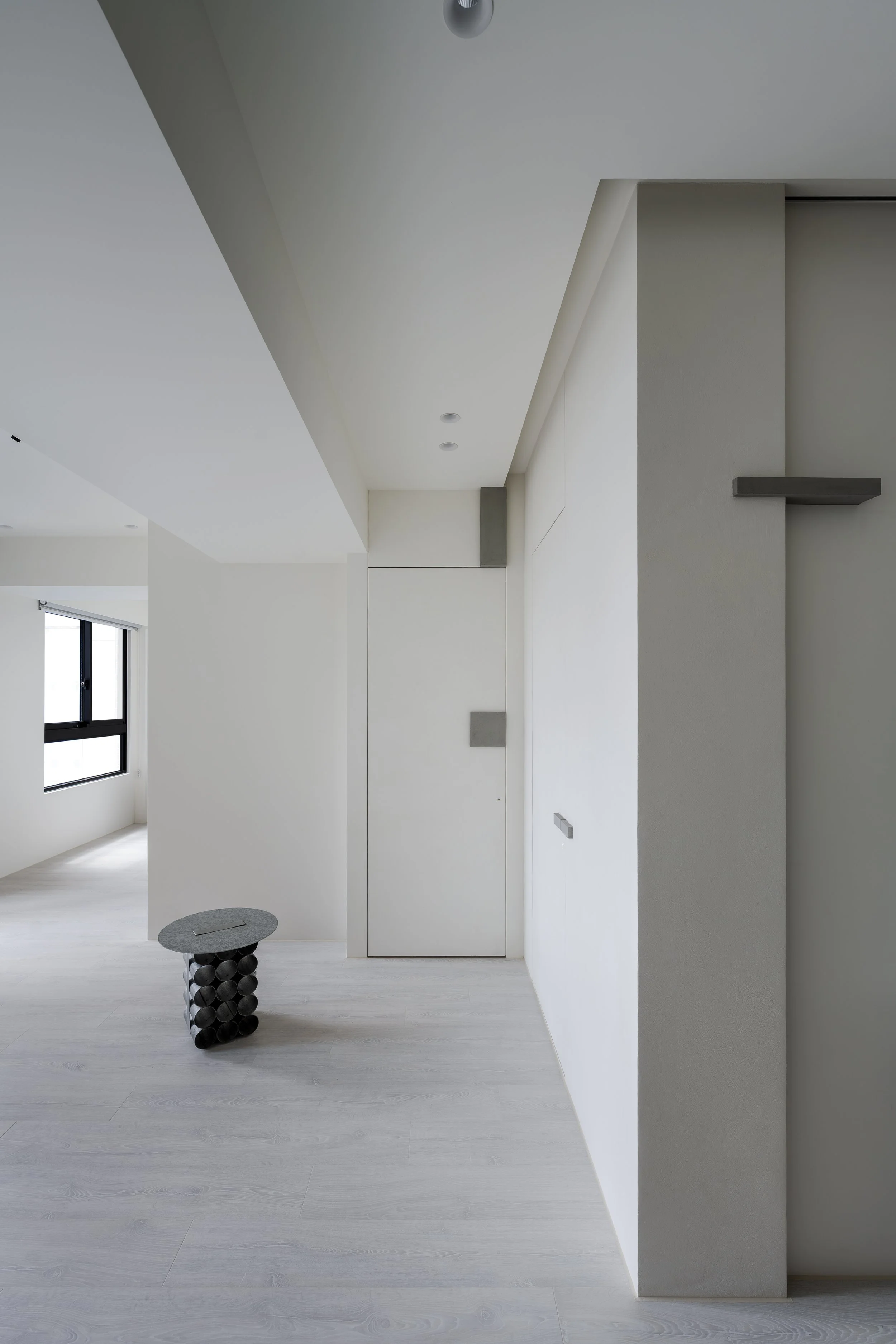
室內回歸白與灰的安靜基調,
灰色礦物塗料、深色木質與石材檯面穿插其中。
材質退居其後,
讓光影、比例與人的移動,
慢慢構成空間真正的表情。
界線仍在,卻不封閉;
秩序仍在,卻不限制。
A Place of Ease
The ease of home unfolds where order gives freedom room to breathe.
With no fixed direction of view, the living room opens to a more fluid way of living.
No longer centered around a television, it shifts with moments of reading, conversation, and solitude.
A movable lounge chair follows these changing rhythms, while where one chooses to settle becomes the new point of orientation,
allowing the room to quietly reshape itself around that presence.Beyond the living room, a flexible zone moves quietly between everyday living and rest.
A concealed lift-up bed allows the space to transform when needed, while fluted glass gently defines its edge without interrupting the passage of light.
This sense of openness continues into the master bedroom and dressing area, where translucent surfaces, shelving, and mirrors overlap in layers.
Light moves across one threshold after another,
linking fragments of daily life into a continuous spatial experience.At the entrance, a muted shade of blue sets a calm and measured tone.
Mosaic tiles establish a quiet rhythm along the wall, while light unfolds across the sculpted ceiling above.
Reflections from the shaped mirror draw glimpses of the opposite space into view, allowing color, light,
and reflection to extend the perceived boundaries of the interior.From here, the palette returns to a restrained composition of white and gray.
Gray mineral finishes, dark timber, and stone surfaces are introduced with subtlety.
Rather than demanding attention, the materials recede, allowing light, proportion, shadow,
and movement to gradually reveal the character of the space.Boundaries remain, yet never enclose.Order remains, yet never confines.
The design does not prescribe a way of living. It simply leaves enough room for life to find its own form —
for moments to shift, for routines to change, and for each person to move at their own rhythm.In this quiet openness, space becomes less a fixed arrangement than a place of possibility,
where everyday life is free to unfold at its own rhythm.and what to leave untouched.Between one space and another,
there is room to draw close,and room enough to remain apart—a quiet place for life to unfold in its own way.
LOCATION: TAIPEI CITY, TAIWAN
YEAR: 2026
PING: 19P
PHOTOGRAPHER: IVAN CHUANG