光隙 Light in the Intervals
-
光隙
光,總是在縫隙裡被感知。
不是最明亮的地方,
而是在遮蔽與敞開之間,
那些被留下的間隙,
使空間開始有了呼吸。
原始為16坪3房的格局,
房間切割使光停留於邊界,
公共空間顯得狹隘。
因應兩人居住,
調整為兩房配置,
捨去一室,
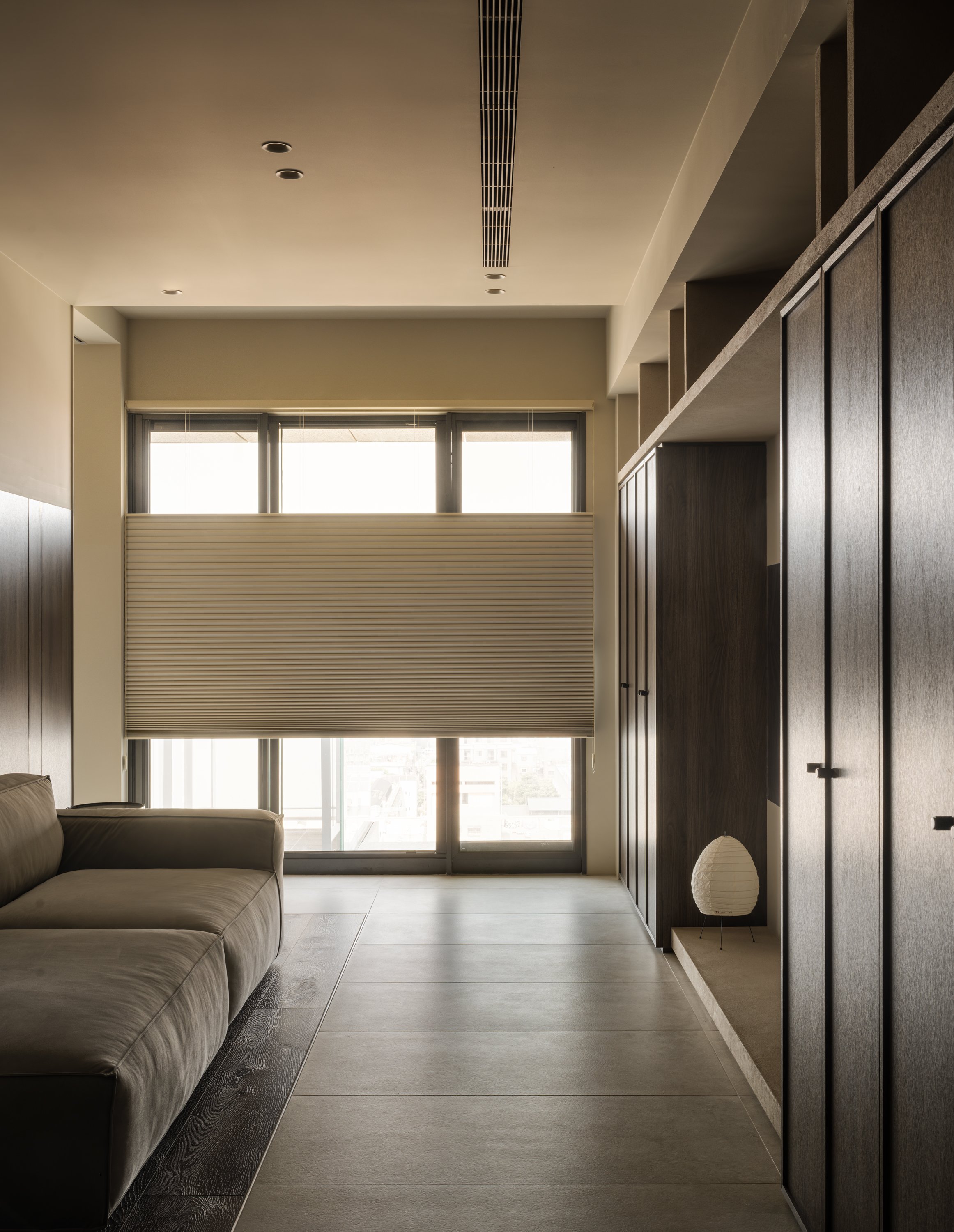
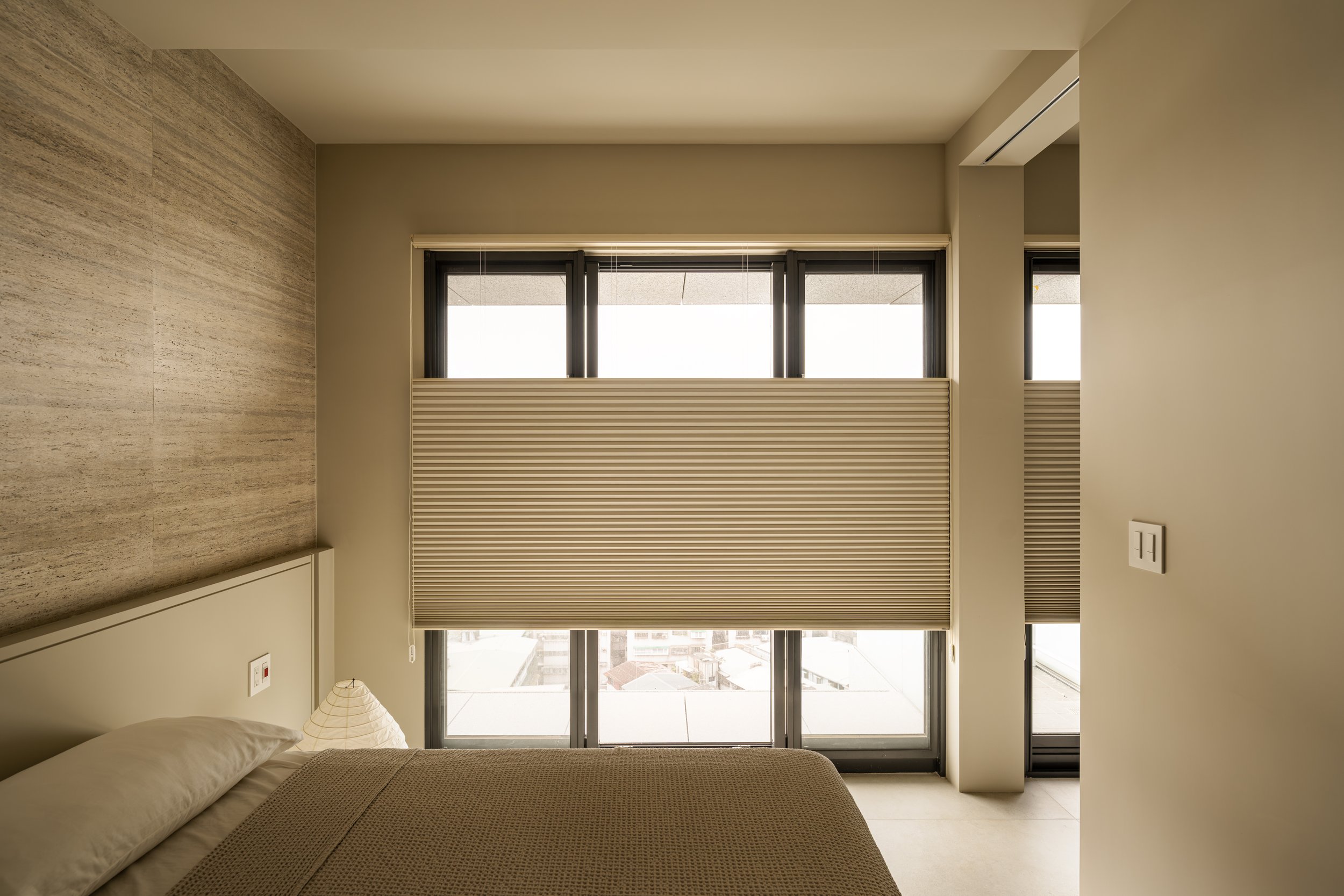
讓光得以引入客餐廳,
恢復空間的開放與流動。
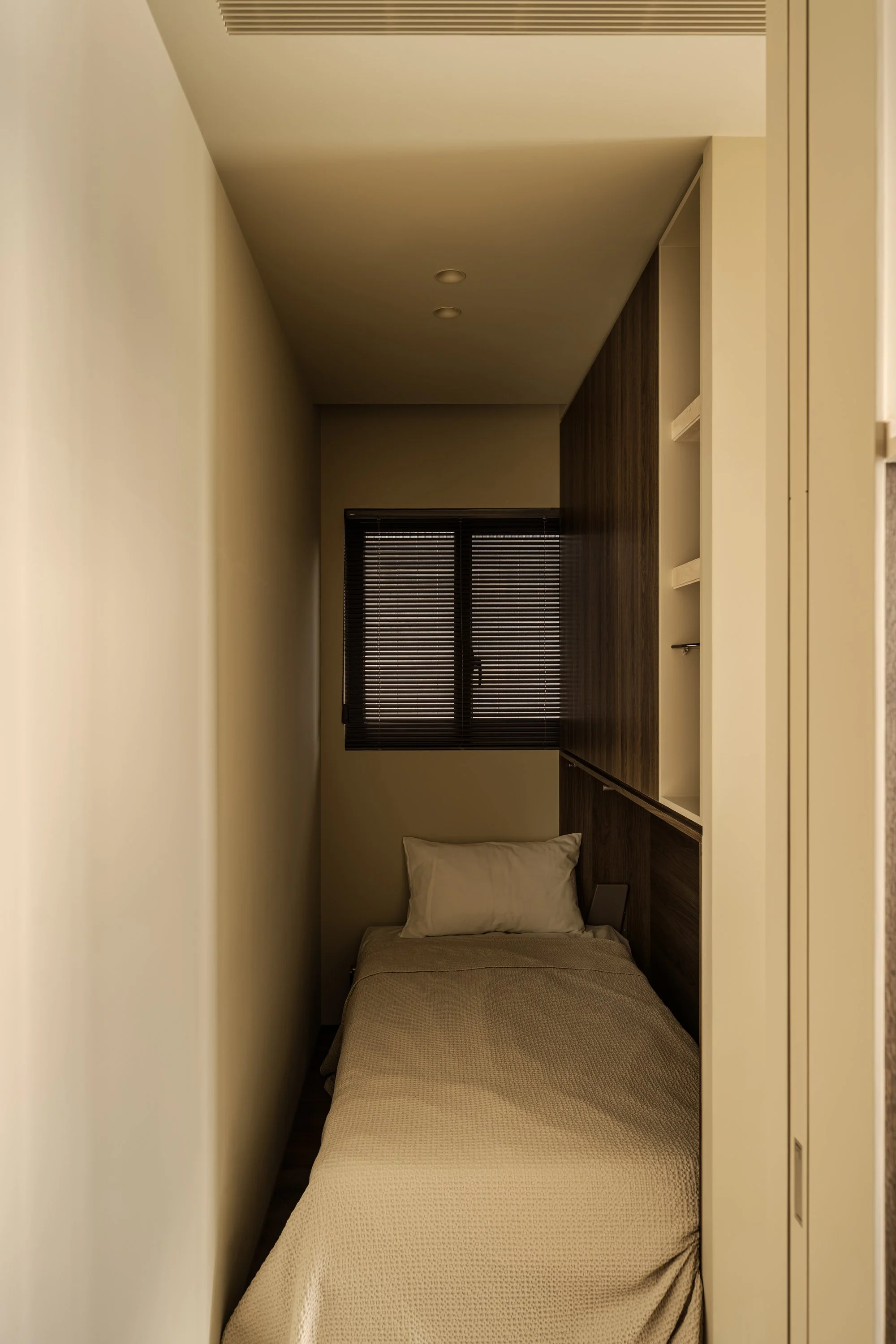
次要臥室整合隱藏掀床,
保留使用彈性;
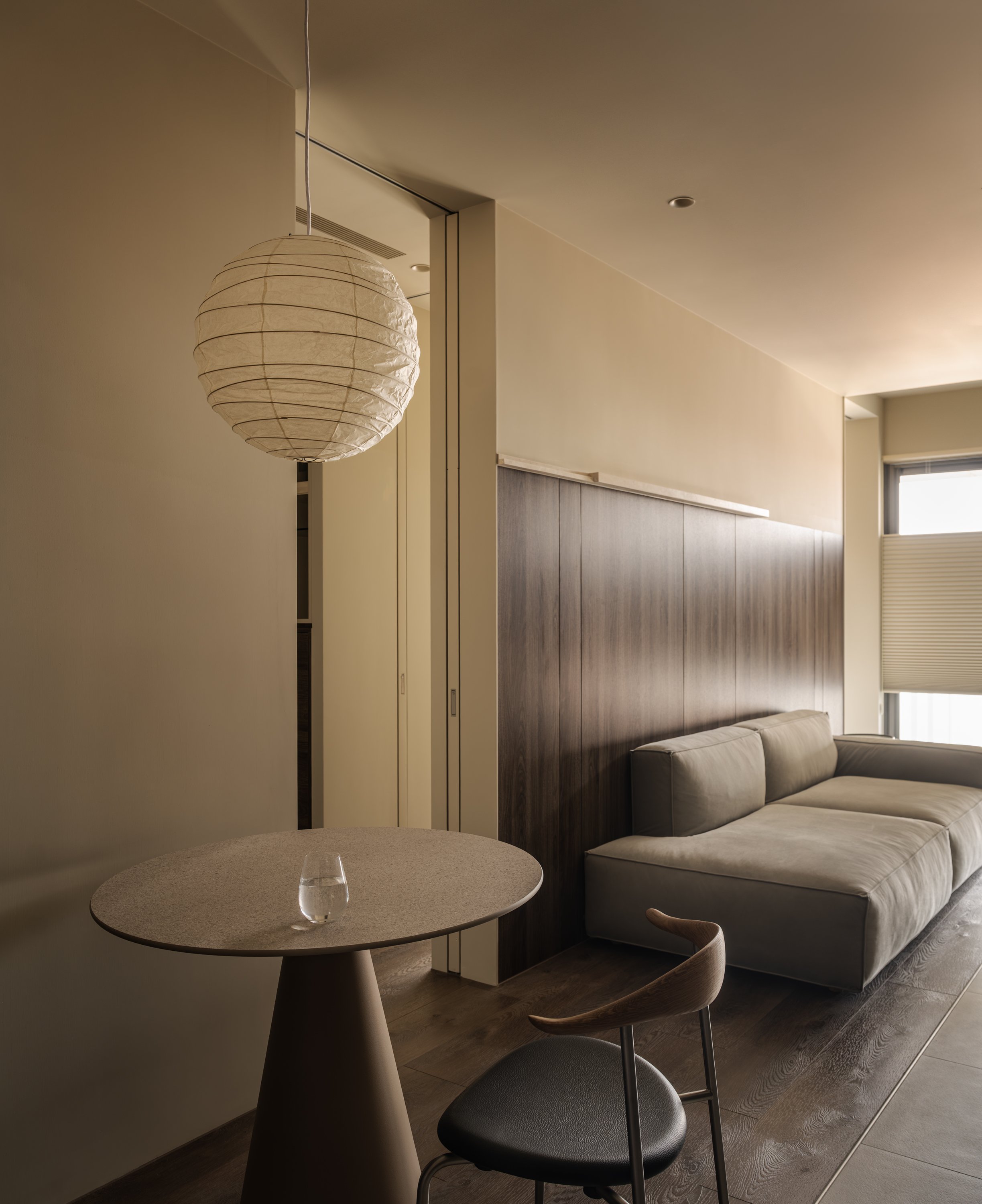
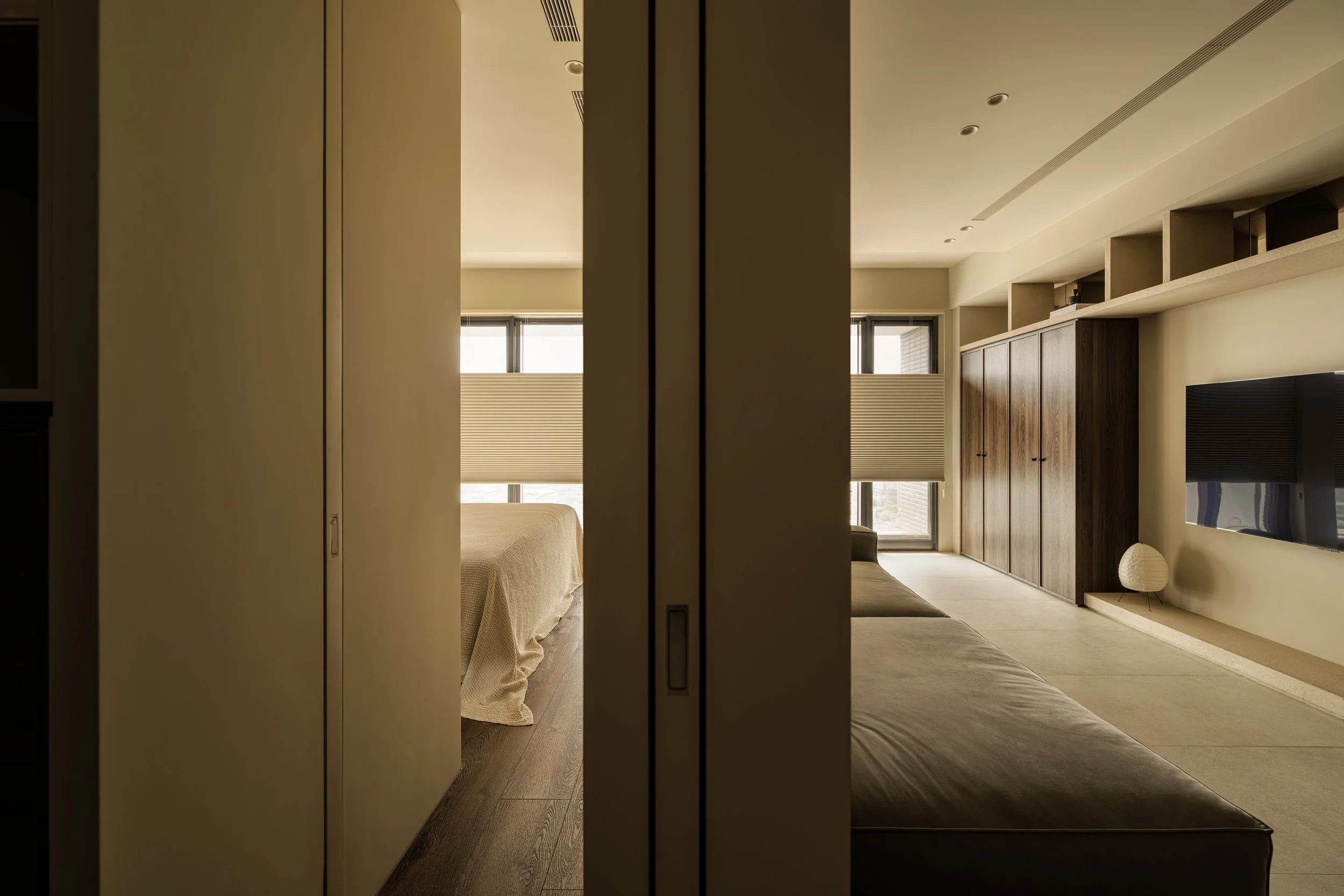
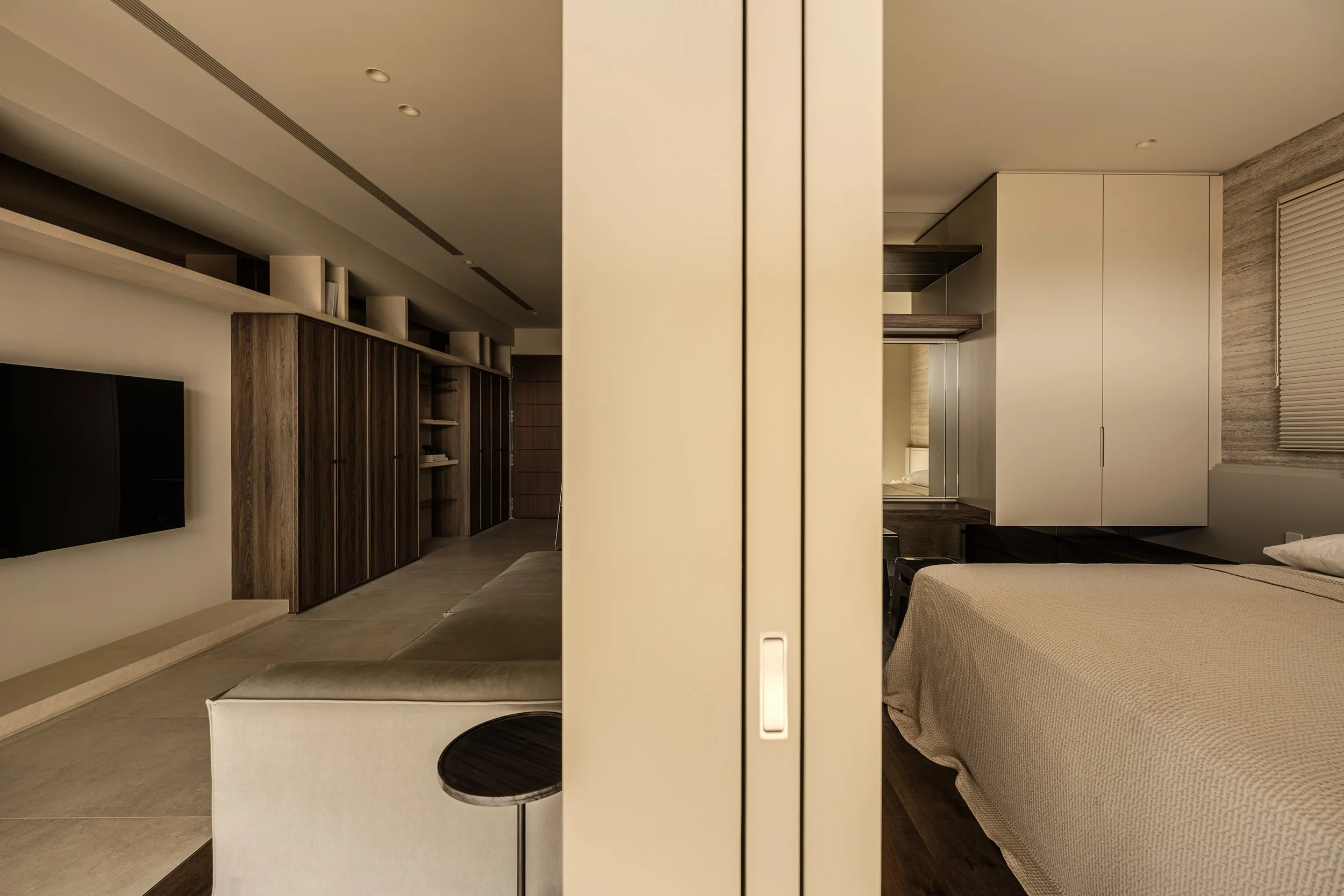
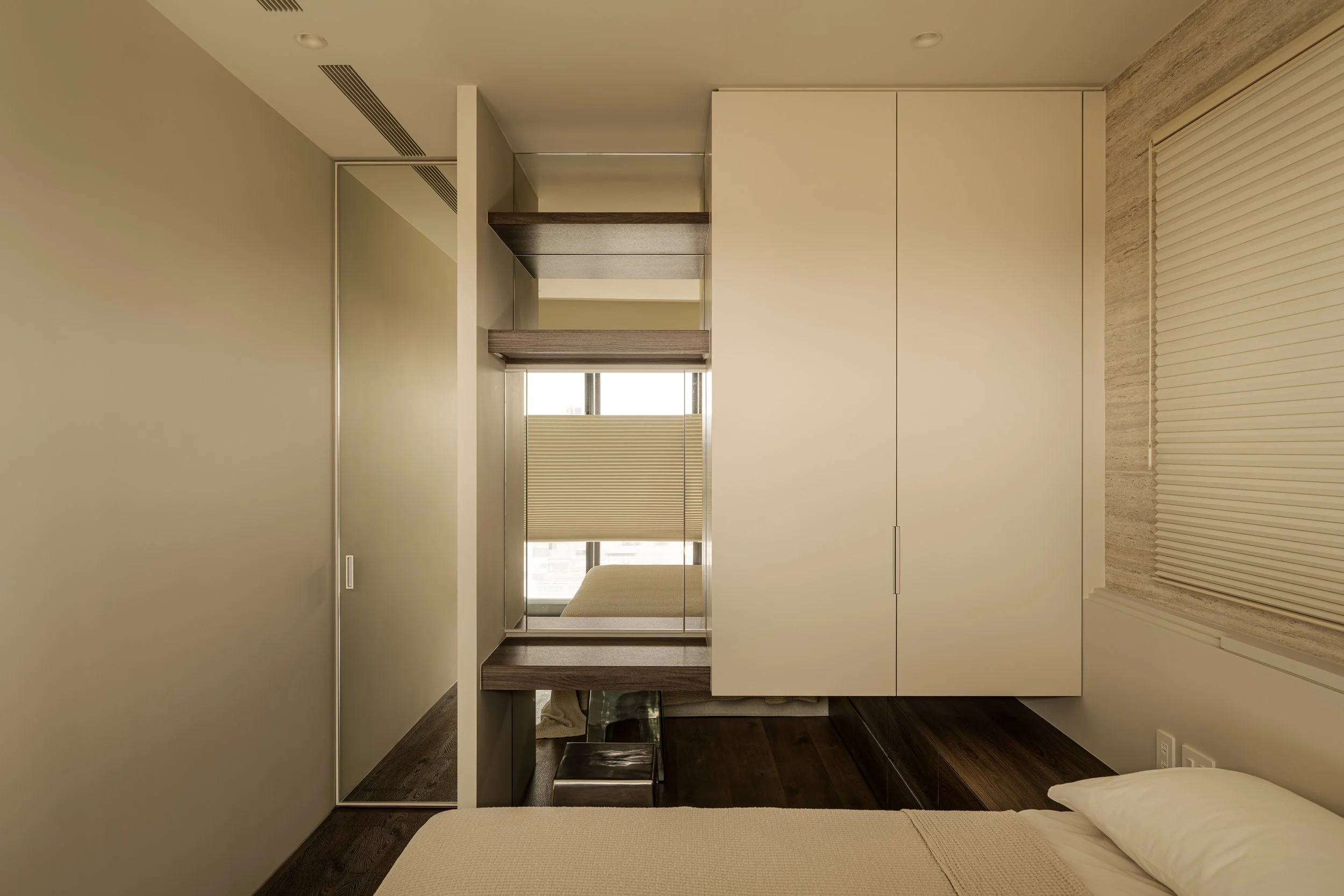
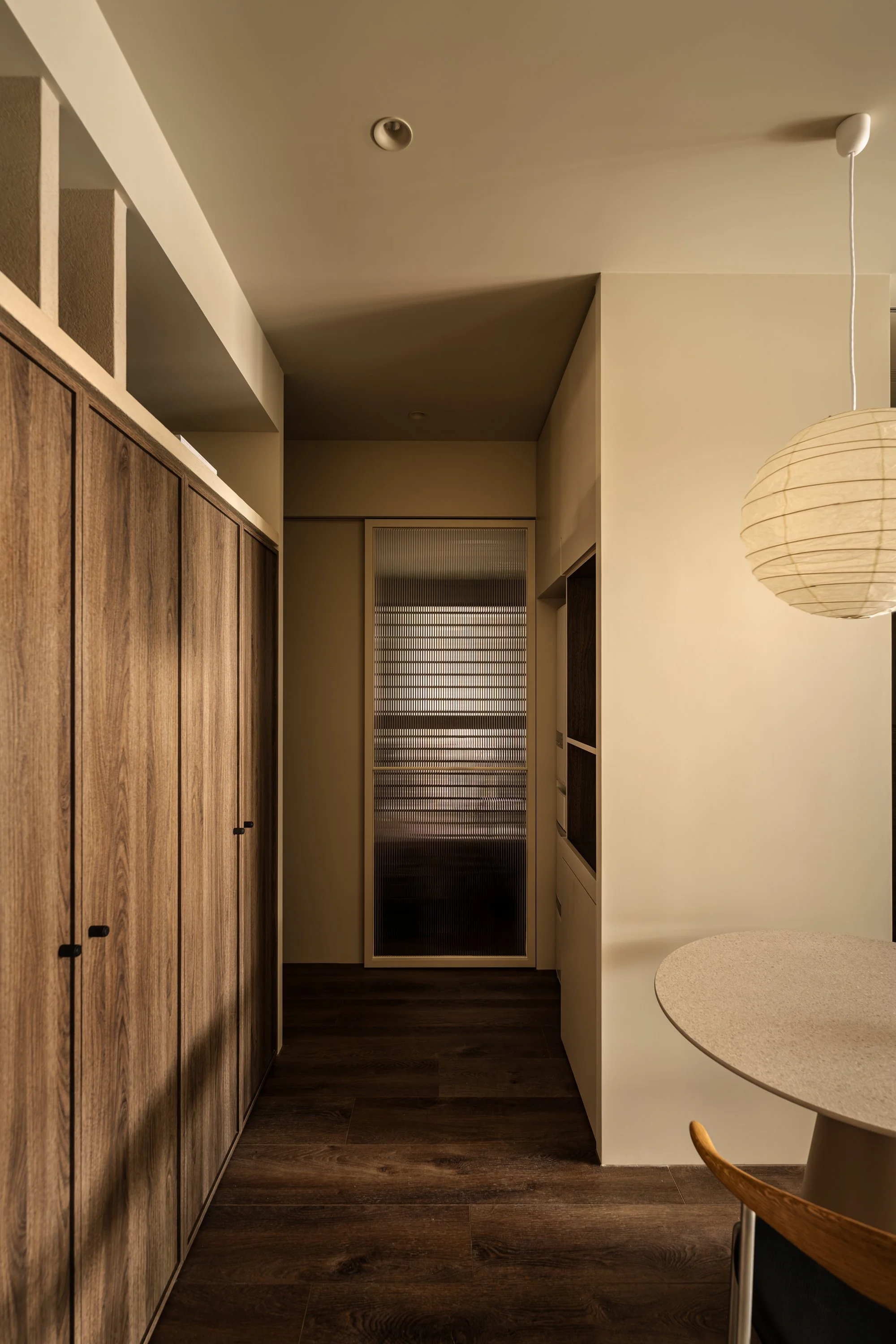
公私領域以橫拉門界定,
於開闔之間取得分隔與連續的平衡。
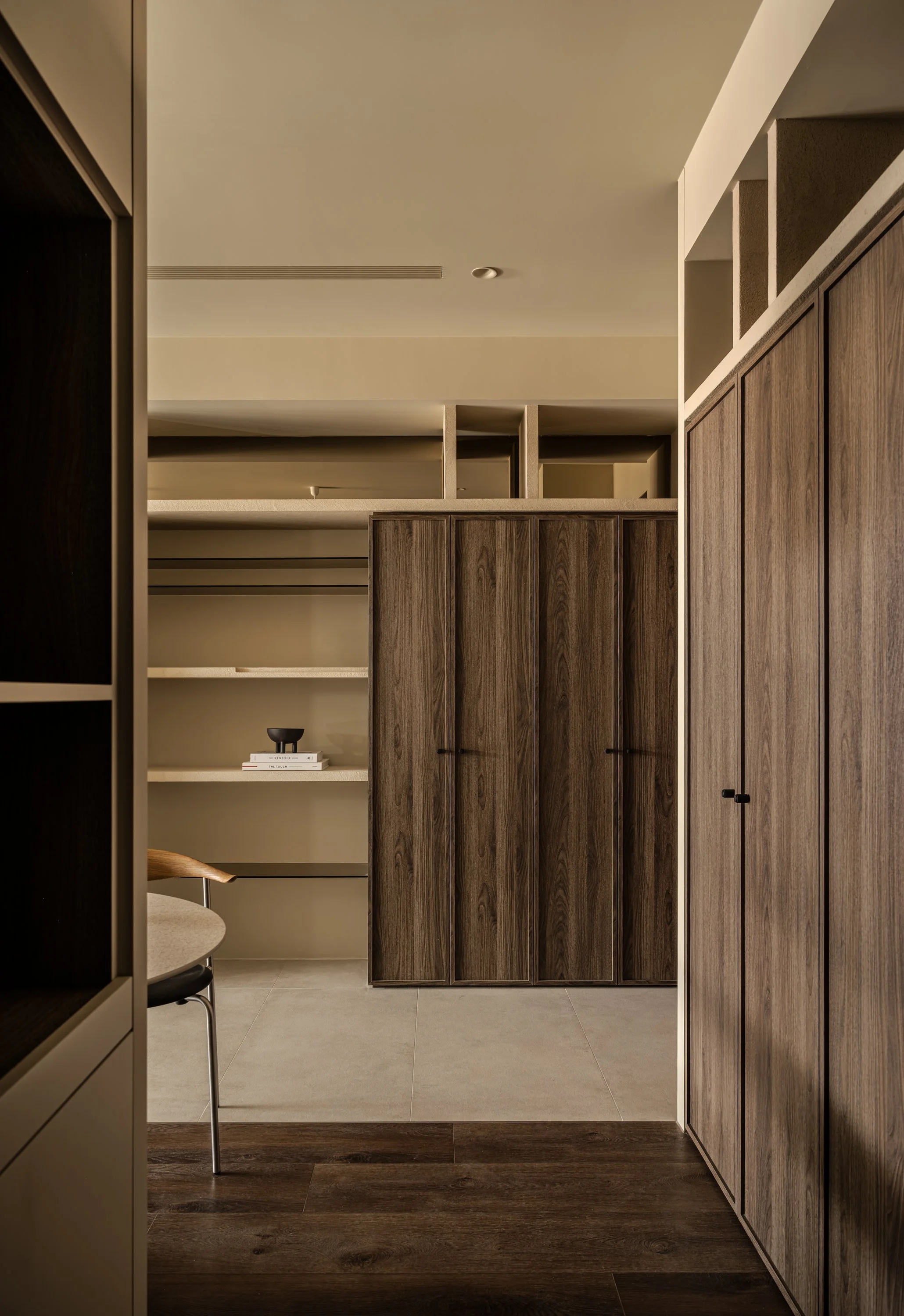
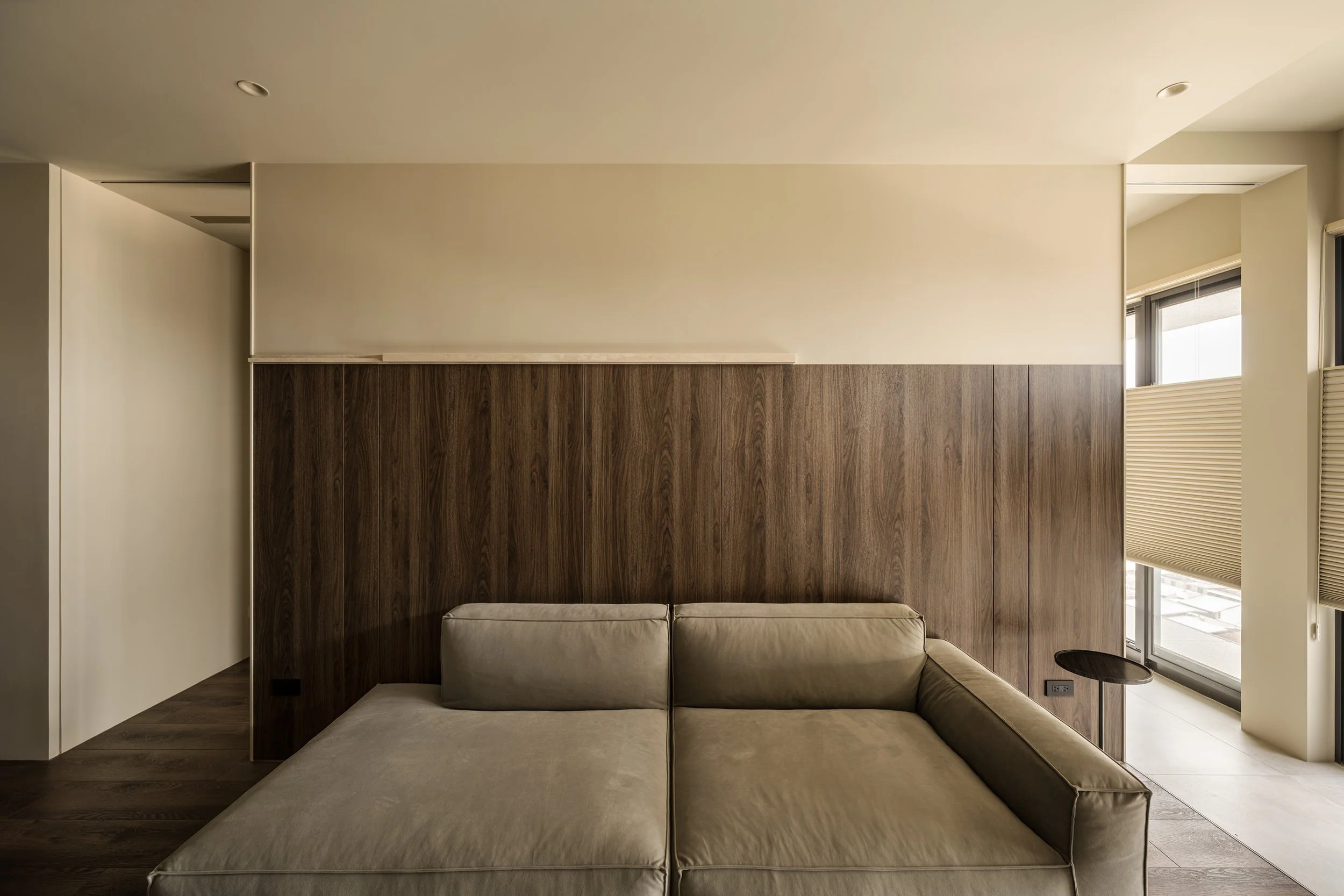
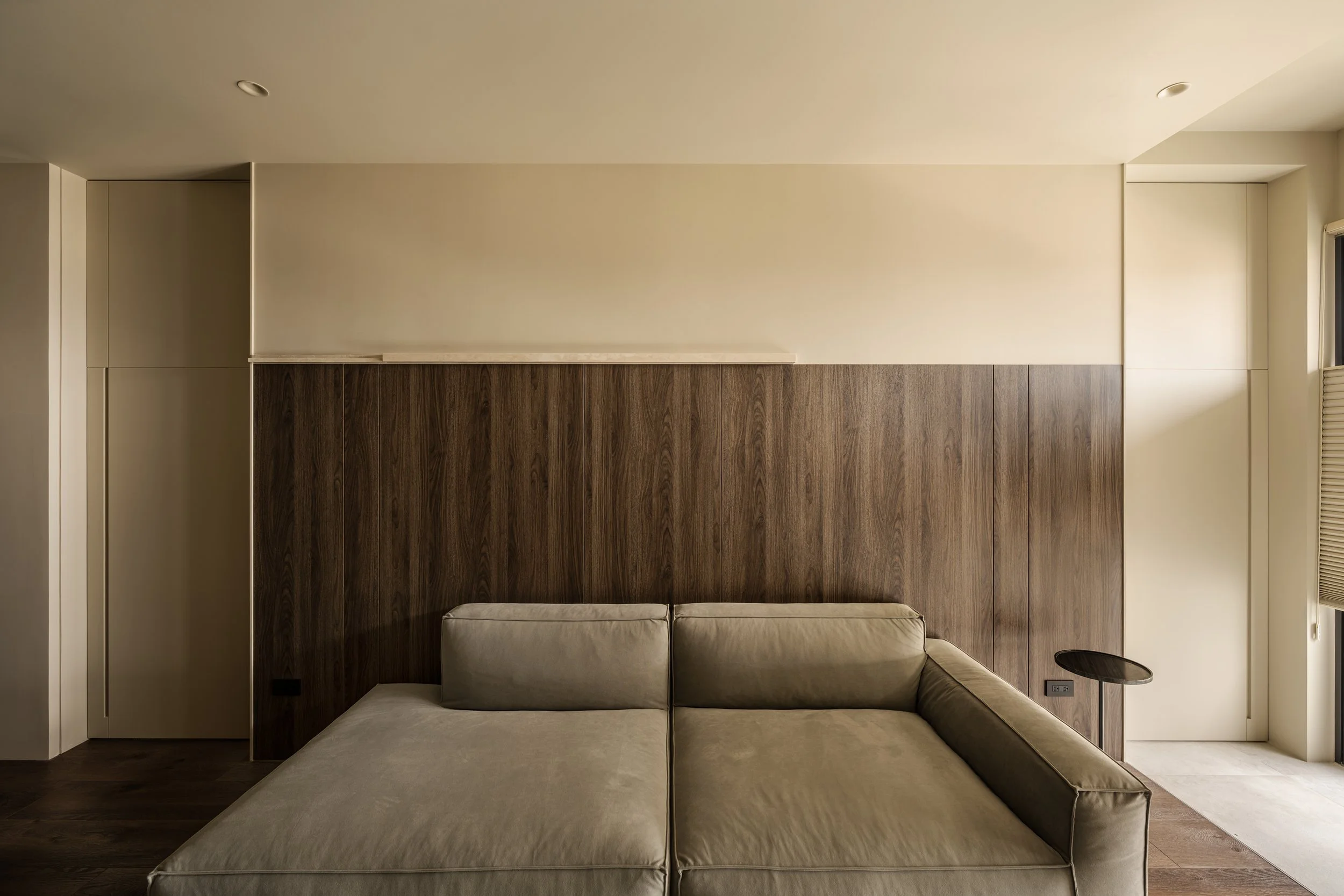
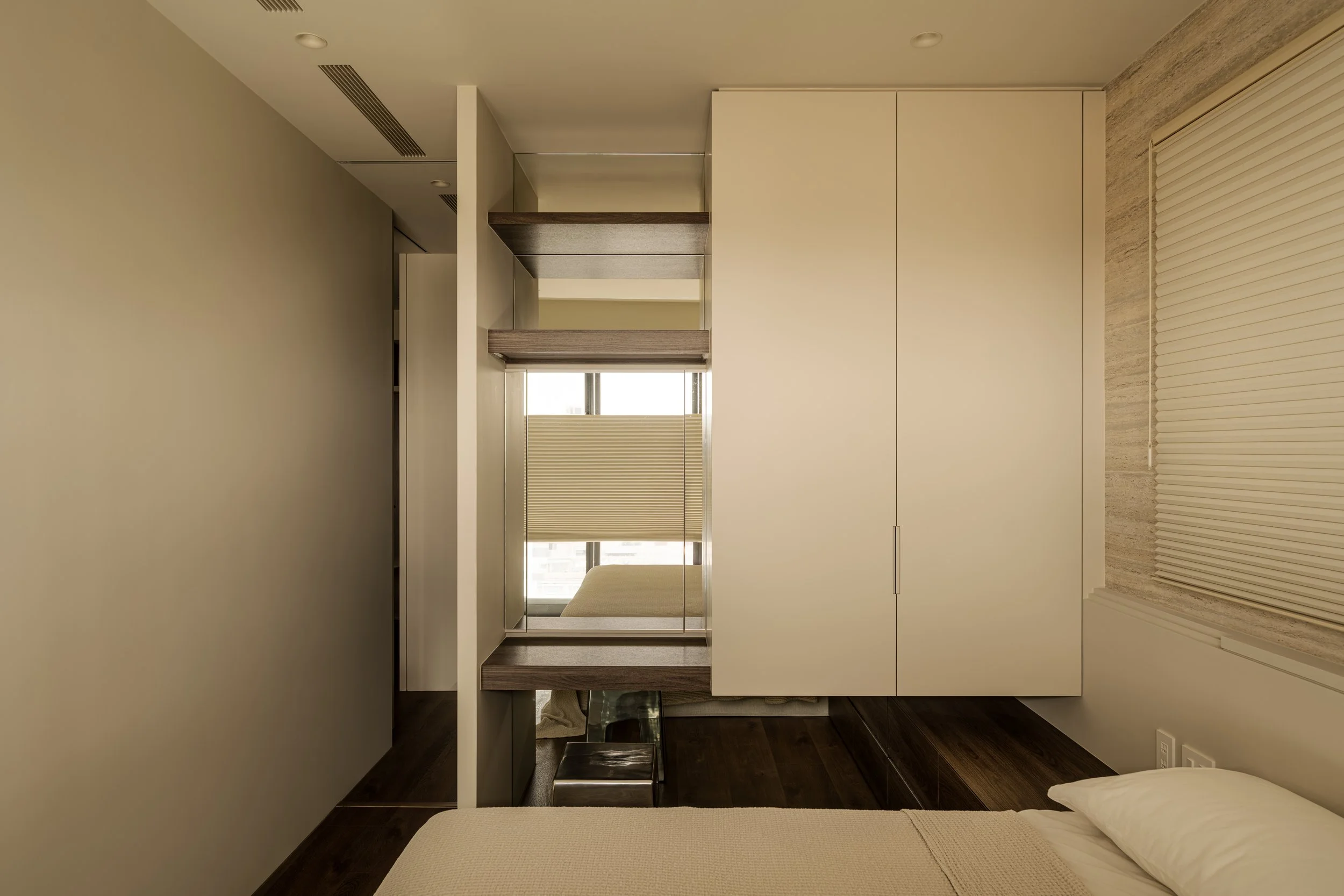
地坪材質的轉換引導動線,
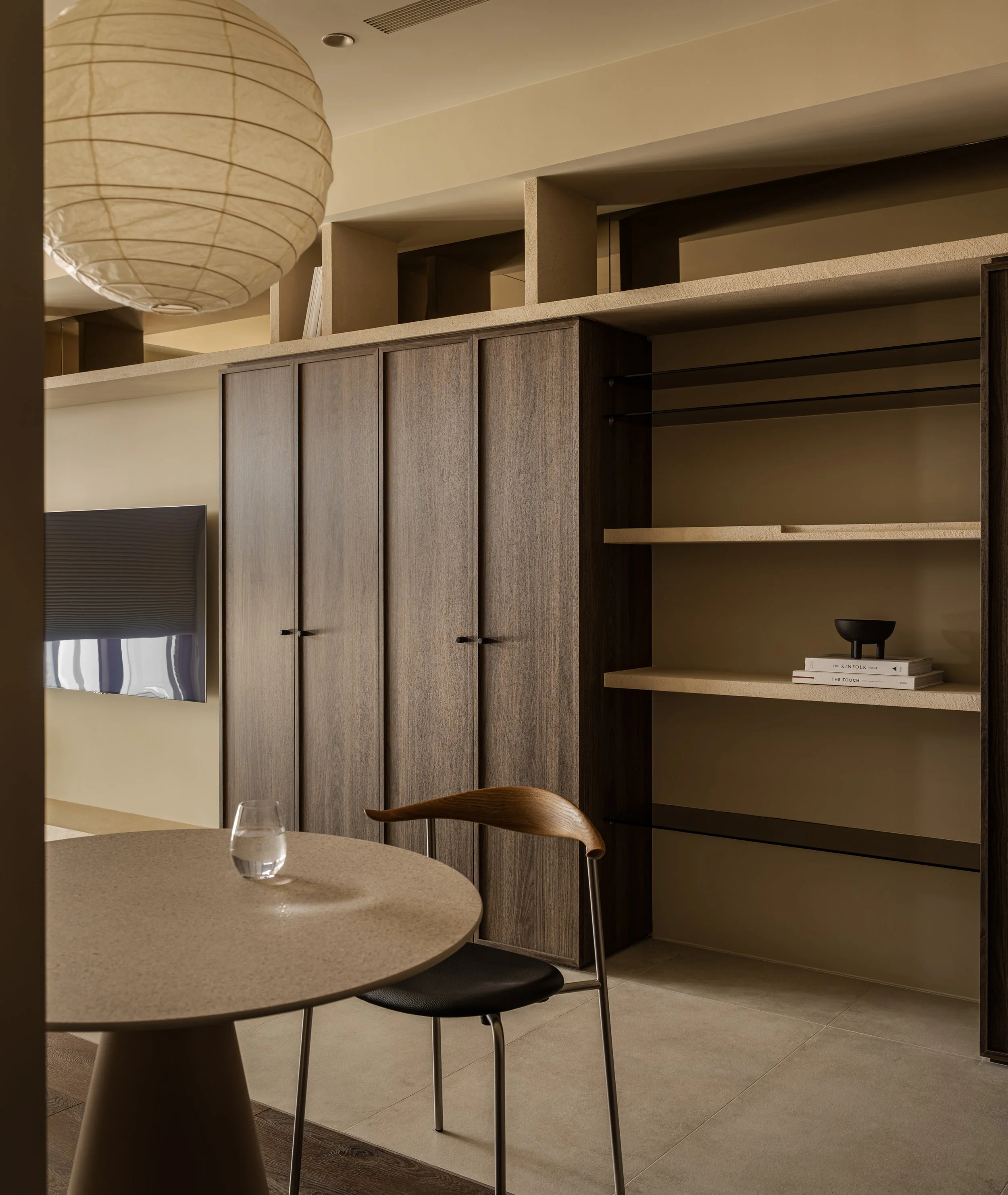
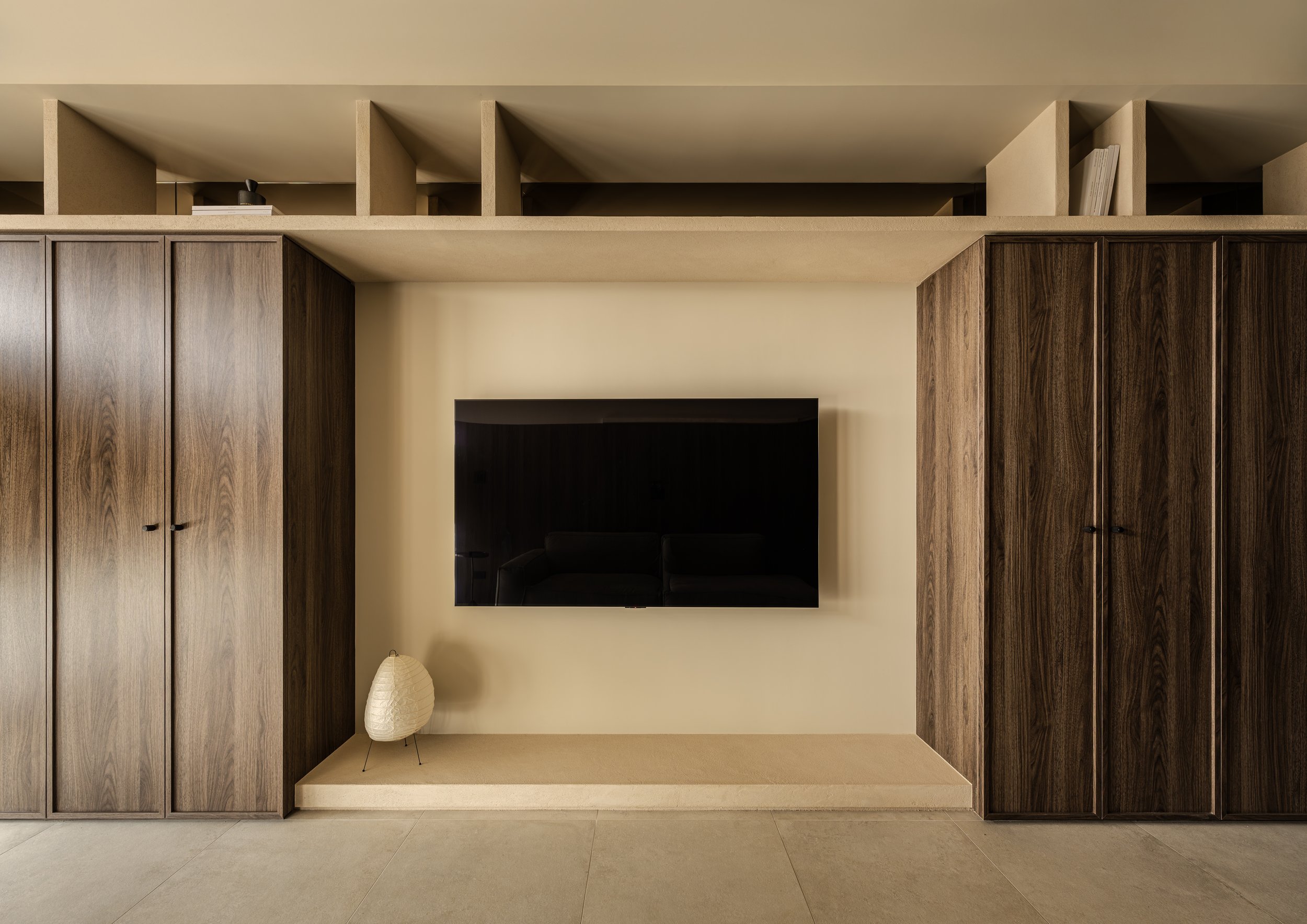
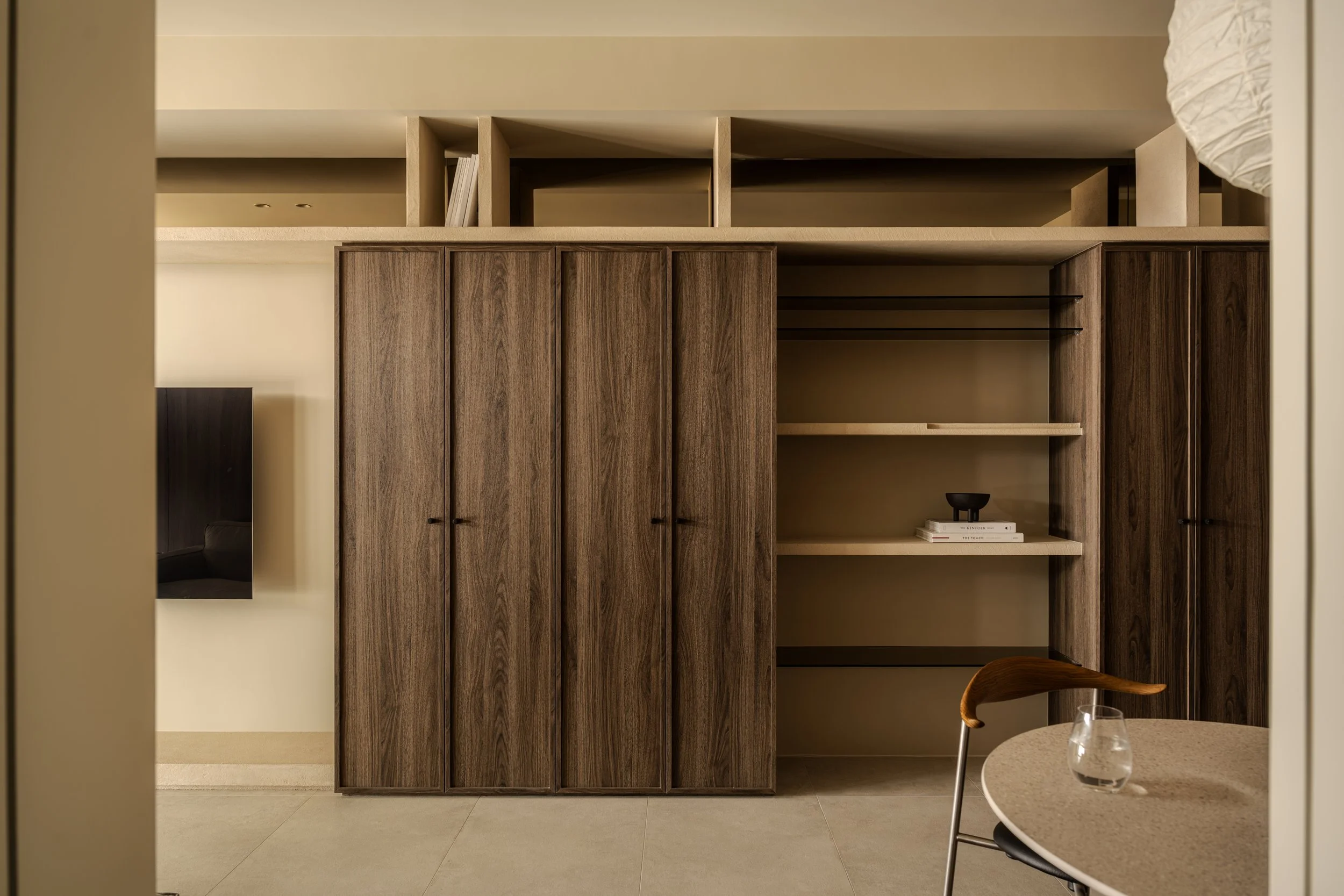
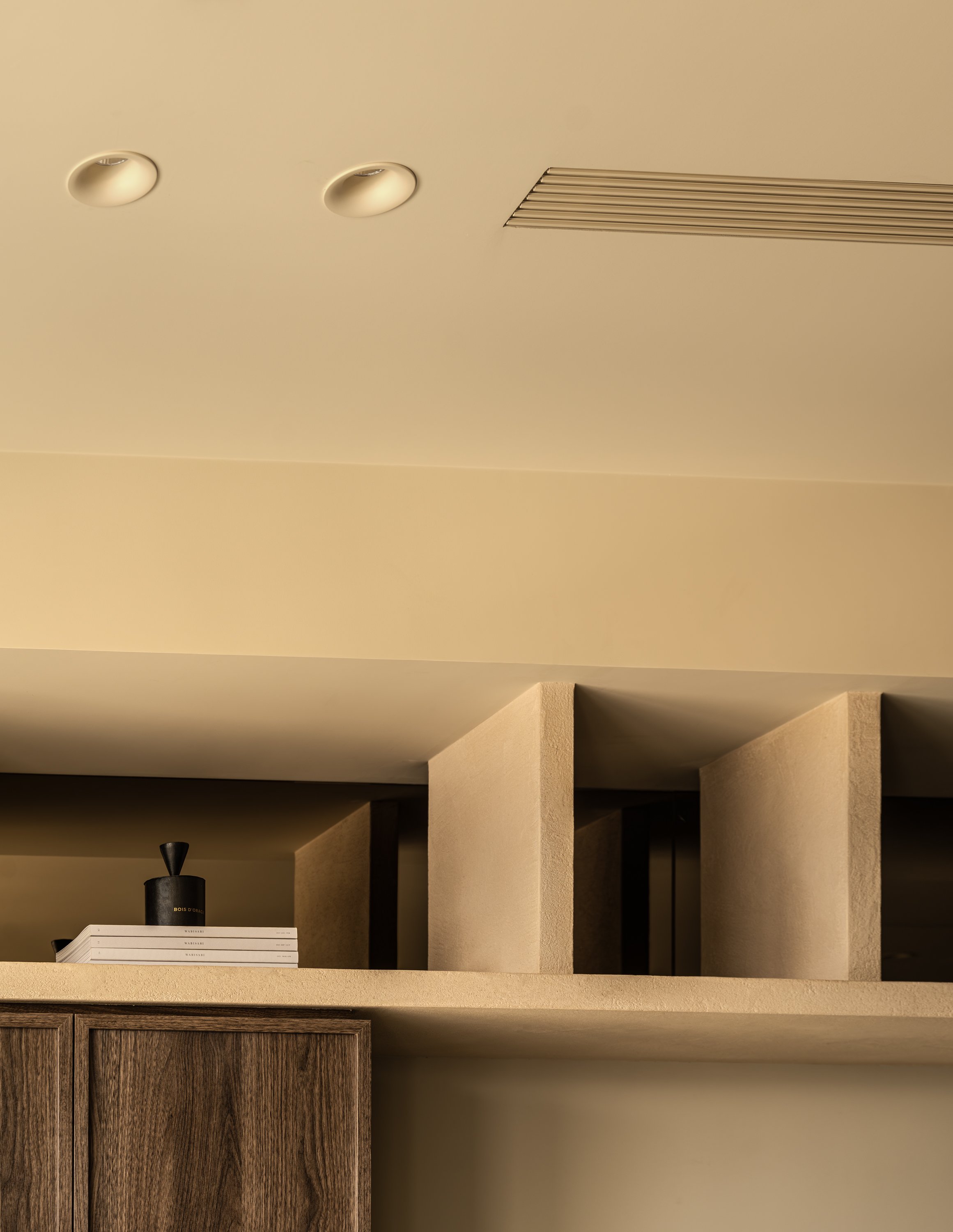
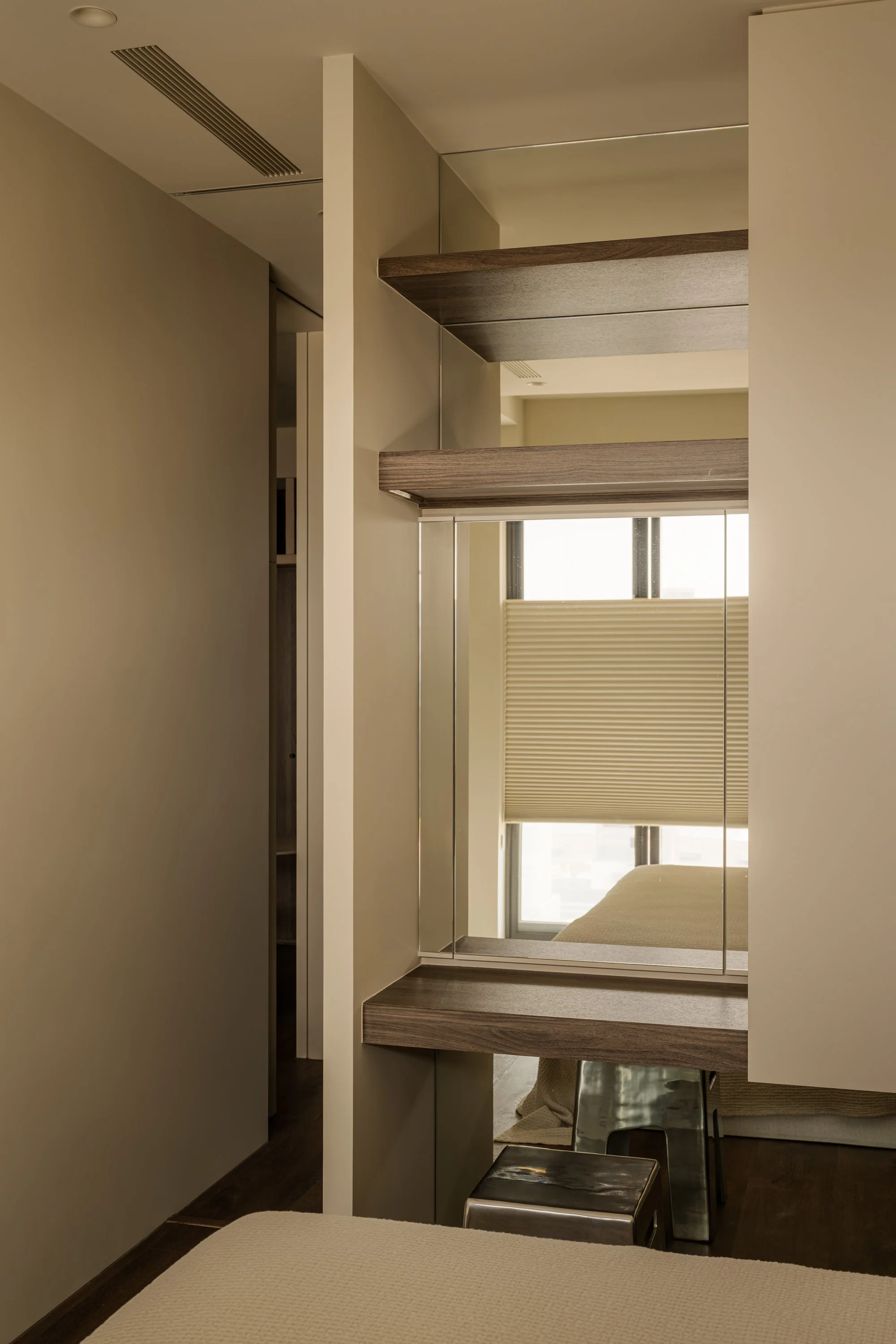
櫃體上方留空、底部輔以茶鏡,
使視線延伸,層次隨之展開。
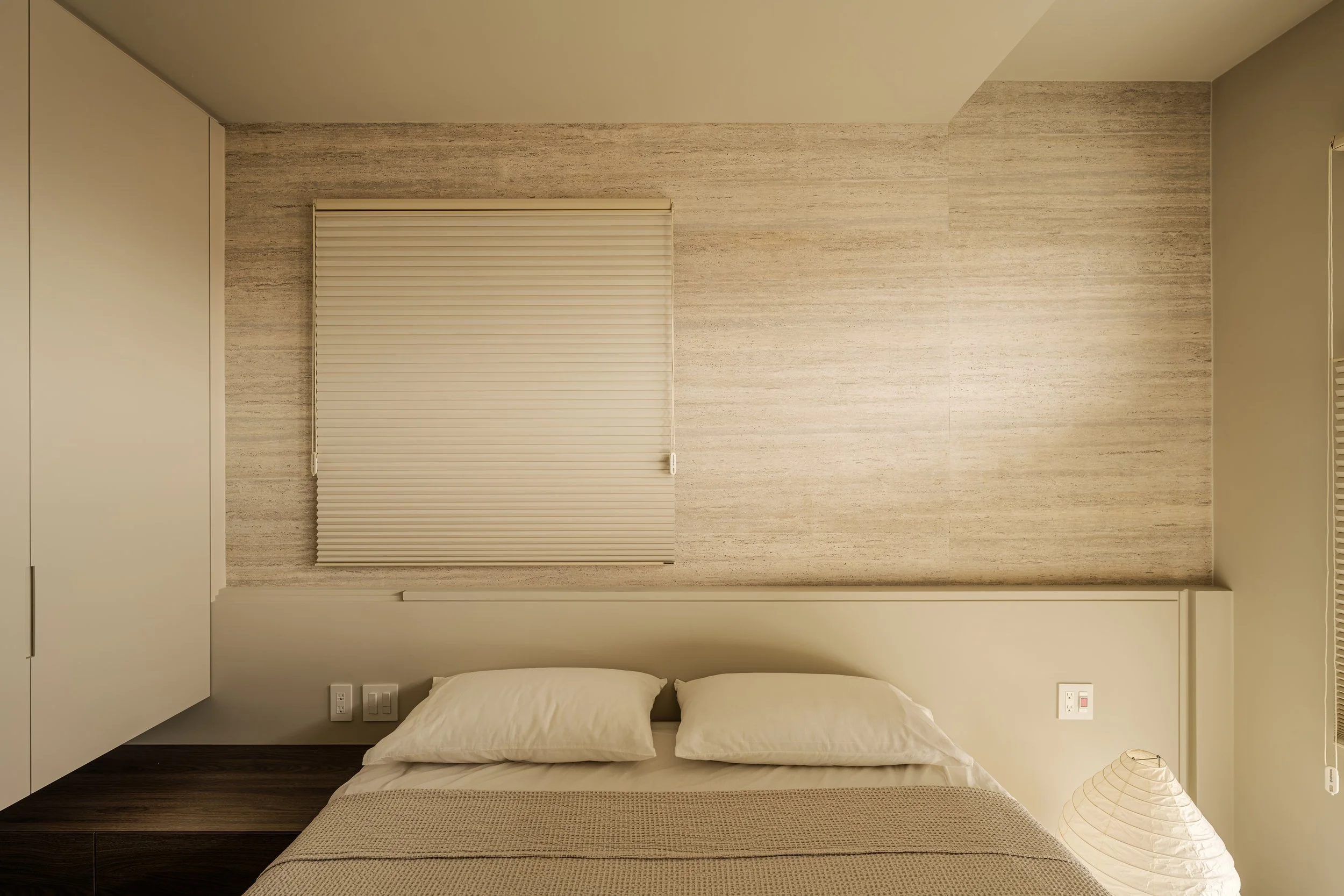
整體以大地色系為基底,
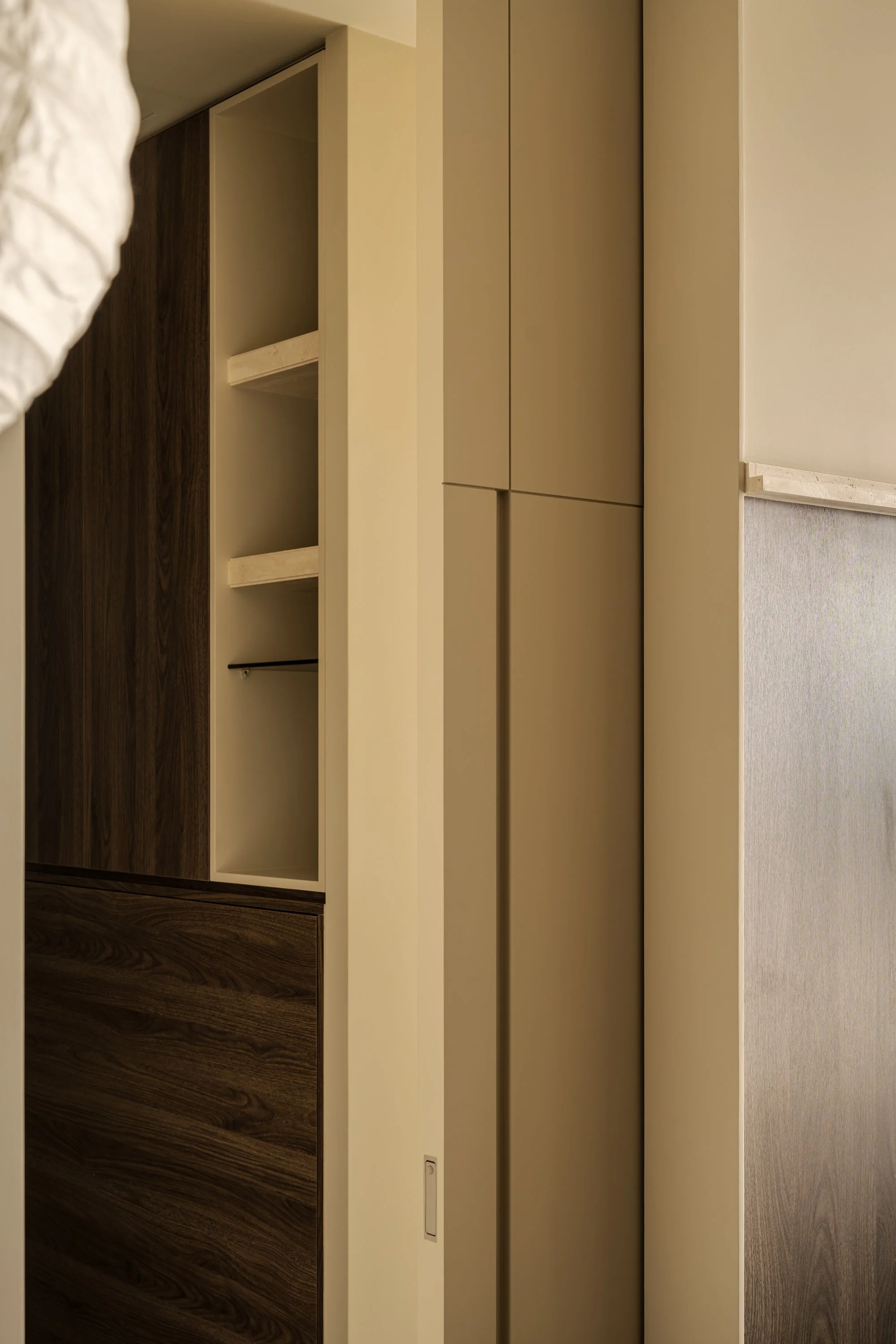
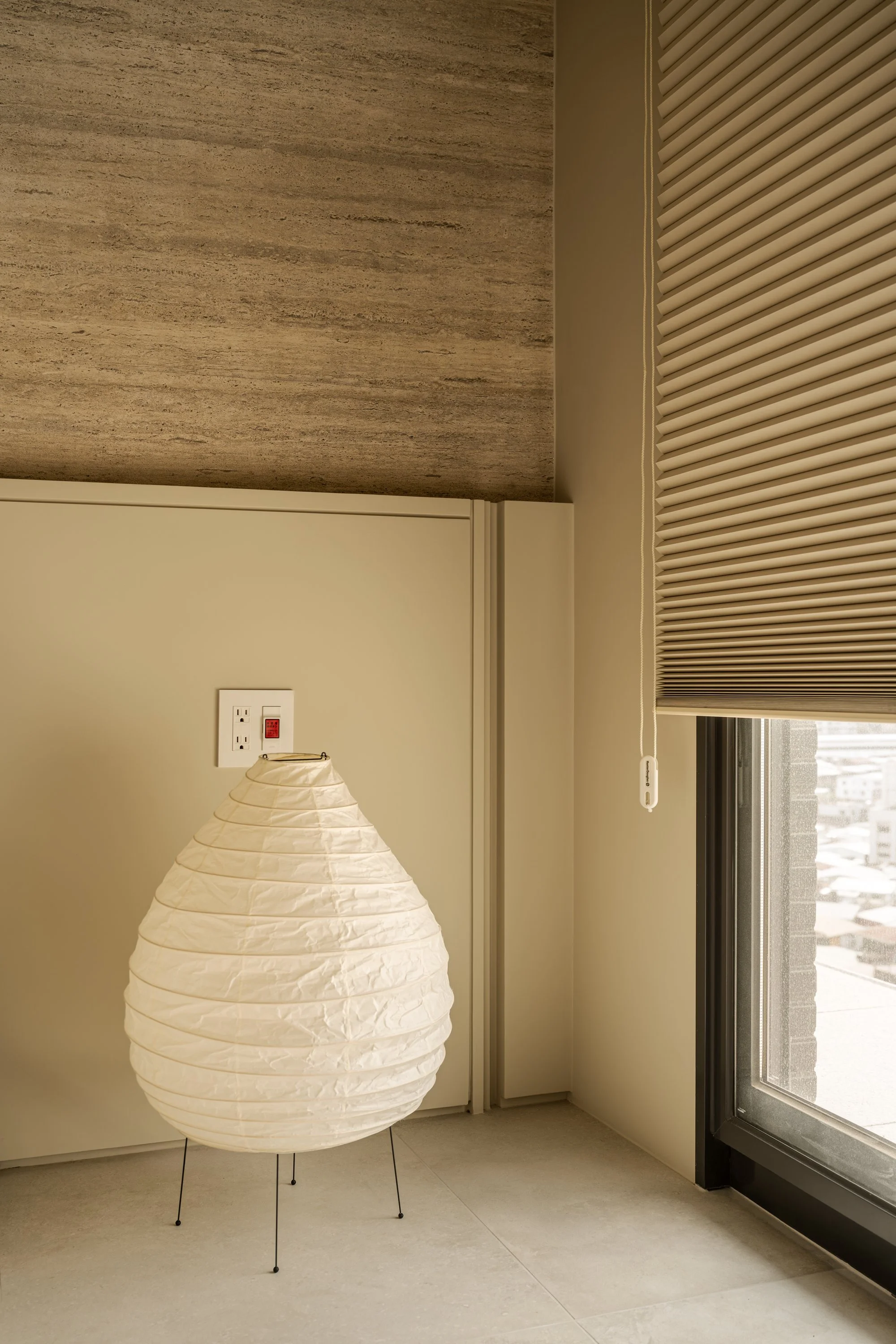
木質、石材與礦物塗料交織,
搭配手工紙燈柔化光線,
讓空間保有溫潤且安定的質地。
光不只是進入,
而是在停留與穿越之間,
被緩慢地感知。
Light in the Intervals.
Light is always perceived
through the gaps.
Not in the brightest place,
but between concealment
and openness—within
the intervals intentionally
left behind—space begins
to breathe.
Originally a 16-ping,
three-bedroom apartment,
the compartmentalized
layout restricted natural
light to the periphery,
resulting in a constrained
public living area.
Designed for two residents,
the plan was reconfigured
into a two-bedroom home.
By removing one enclosed room,
natural light is drawn
into the living and dining areas,
restoring openness, circulation,
and spatial fluidity.
The secondary bedroom
integrates a concealed fold-up bed,
allowing the space to
flex between guest room,
study, and open-use area.
Sliding doors define the
transition between
public and private zones,
achieving a balance
between separation
and continuity.
Subtle flooring transitions
guide movement,
while elevated cabinetry,
open upper voids,
and tea-tinted mirror
bases extend the visual
axis and introduce layered depth.
An earthy palette anchors
the interior, combining wood,
stone, and mineral-based
finishes to create a calm,
tactile environment.
A handcrafted paper
lantern diffuses light softly,
lending warmth and a
quiet sense of stillness to the space.
Here, light is not simply introduced.
It is shaped, filtered,
and allowed to linger—
slowly revealing the depth of space.
LOCATION: NEW TAIPEI CITY, TAIWAN
YEAR: 2026
AREA: 14 PING
PHOTOGRAPHER: IVAN CHUANG